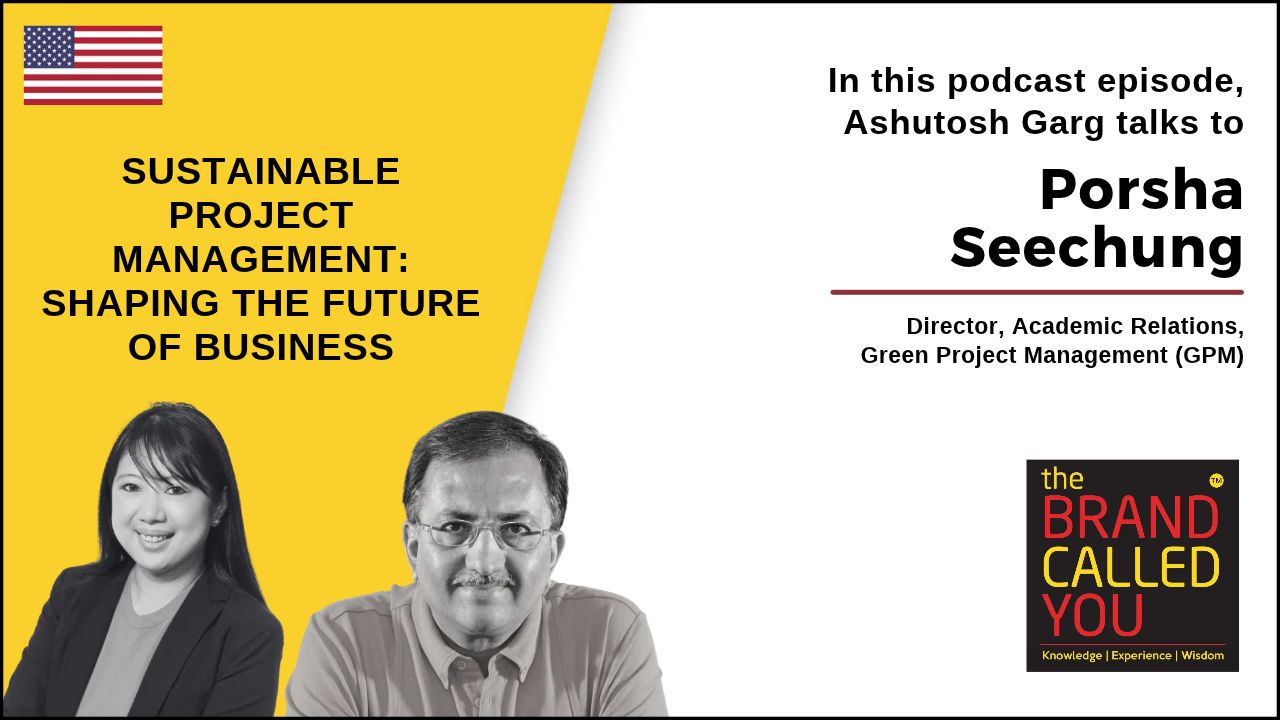
Porsha Seechung, Director of Academic Relations at Green Project Management
- Selling desserts in her Philippine neighborhood provided her with early business exposure.
- School leadership experiences included being a team leader, student teacher, and co-captain of the varsity swim team.
Podcast
Podcast: Play in new window | Download
Follow TBCY RSS
Overview
Dive into this insightful episode of The Brand Called You, where Ashutosh Garg sits down with Porsha Seechung, Director of Academic Relations at Green Project Management (GPM). Explore how sustainability is evolving from a mere environmental concern into a vital element of business strategy, and discover why project managers and future leaders must embrace a more holistic approach in today’s rapidly changing world.
00:42 | What shaped Porsha Seechung’s interest in business and leadership?
- Selling desserts in her Philippine neighborhood provided her with early business exposure.
- School leadership experiences included being a team leader, student teacher, and co-captain of the varsity swim team.
- These experiences taught her how to manage different personalities and keep groups focused on common goals.
02:13 | When did sustainability begin to influence her professional thinking?
- Her interest developed gradually, initially as a diver invested in conservation.
- She transitioned from an accounting career in New York to pursuing a master’s degree in project management.
- Through sustainable project management, she realized that sustainability is a business responsibility, not just an environmental issue.
04:24 | What does Green Project Management (GPM) do?
- GPM is a social enterprise advancing sustainability within the project management profession.
- It provides training, certification, and resources globally.
- It equips professionals to manage projects successfully and responsibly.
05:12 | How does Porsha define sustainable project management?
- Delivering projects successfully today while ensuring positive outcomes for the future.
- It expands the traditional focus on time, scope, and budget to include long-term social and environmental impacts.
06:36 | What are the biggest misconceptions companies have about sustainability?
- A common belief is that sustainability is inherently expensive.
- Organizations often see it as an additional cost rather than a strategic investment.
- Sustainability should be part of organizational strategy to drive resilience and create opportunities.
07:49 | Why should CEOs treat sustainability as a strategic issue rather than compliance?
- Sustainability decisions shape resource allocation, risk management, and value creation.
- Compliance may simply “check a box,” while strategy can support innovation and market resilience.
- Projects are mechanisms that turn sustainability strategy into business outcomes.
10:19 | How can organizations measure genuine value from sustainability efforts?
- Define success upfront and measure outcomes that matter in specific contexts.
- Balance financial, environmental, and social metrics, both quantitative and qualitative.
- Compare results with a baseline to track progress and measure business value.
11:17 | Why embed sustainability into university curricula?
- Equip students with sustainability competencies before they enter the workforce.
- Various approaches, including electives, integrated curricula, and certifications, can be valuable.
- This prepares future professionals to make better, more responsible decisions.
13:04 | What skills will tomorrow’s project managers need?
- Foundational skills include big-picture thinking, time and budget management, and people coordination.
- There is an enhanced need for human skills such as judgment, communication, and ethical leadership.
- Project managers will need to make sustainable decisions and solve complex problems in changing contexts.
14:44 | Why is interdisciplinary collaboration so critical?
- No single discipline can tackle all aspects of complex problems alone.
- Bringing together diverse perspectives can uncover blind spots, challenge assumptions, and lead to better outcomes.
16:52 | How will AI and digital technologies influence sustainable project delivery?
- AI can assist with data analysis, automate routine tasks, and provide insights.
- Human judgment remains crucial for stakeholder management and ethical decision-making.
- Technology can free professionals to focus on leadership and strategic action.
RESOURCES
Learn more about Porsha Seechung: LinkedIn
ENJOYED THIS PODCAST?
Sustainability isn’t just about the environment; it is also about core business responsibility. As discussed in the episode, it requires stewardship, leadership, and execution.
Share your thoughts in the comments and help spread these insights throughout your network.
Would you love to give us 5 stars? ⭐⭐⭐⭐⭐ If yes, we’d greatly appreciate your review. Help us reach more people as we bring conversations with leaders, high achievers, and thought leaders from diverse backgrounds and nationalities. Excellence can come from anywhere. Stay informed and hear from emerging achievers and experts from around the world.
Stay updated with what’s shaping the world today through the latest The Brand Called You Podcast episode. Follow us on iTunes, Spotify, and Anchor.fm.
You can find us at:
Website: www.tbcy.in
Instagram: http://bit.ly/3HO7N06
Facebook:http://bit.ly/3YzJOaD
Twitter: http://bit.ly/3wMBOXK
LinkedIn: https://www.linkedin.com/company/tbcy/
YouTube: http://bit.ly/3jmBqfq
Chingari: https://chingari.io/tbcypodcast
Josh: http://bit.ly/3WWP0nB
Thanks for listening!
Profile
- Porsha Seechung is the Director of Academic Relations at Green Project Management (GPM), focusing on sustainability and responsible project management.
- She advocates for integrating sustainability into business strategy, moving beyond viewing it solely as an environmental concern.
- Her work highlights the importance of holistic project management, balancing environmental, social, and business considerations.

