Strategy Is Attitude: Ganzo Ulziibayar on Subconscious Thinking and Strategic Leadership
- Explores how herding animals fostered risk awareness and responsibility.
- Explains why strategists must care for resources and people, not just themselves.
Podcast
Podcast: Play in new window | Download
Follow TBCY RSS
Overview
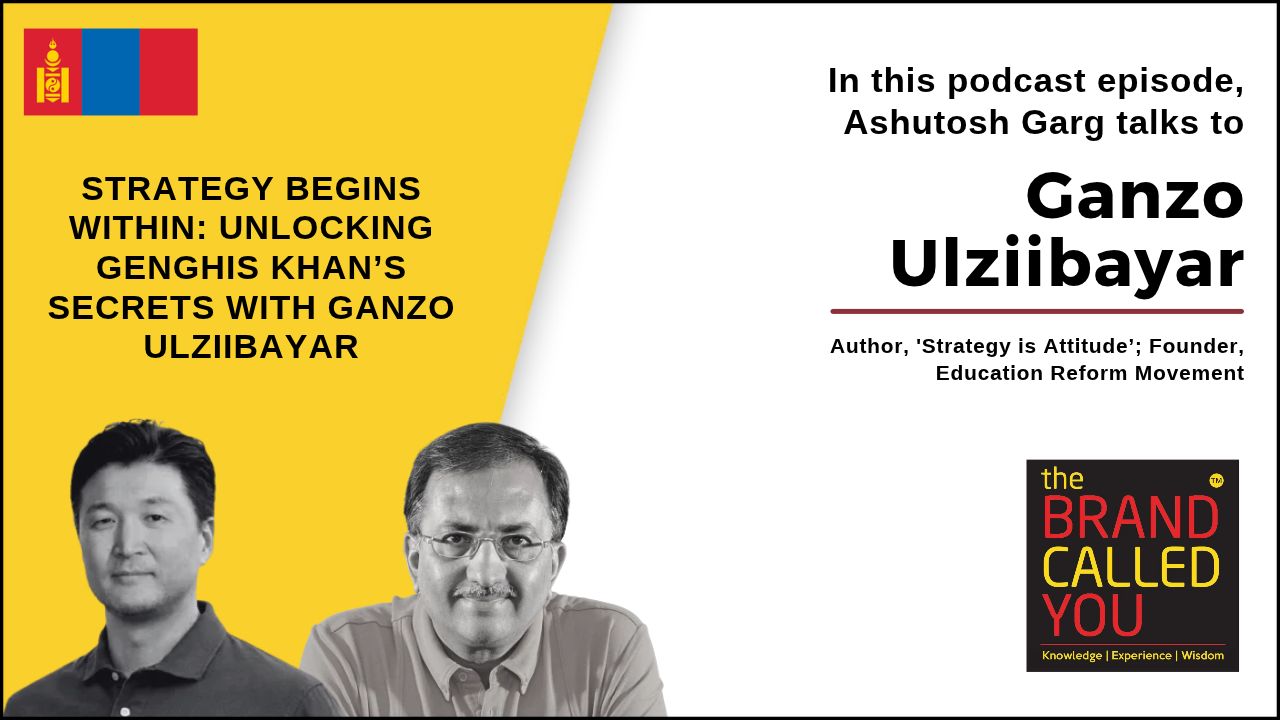
Gain fresh perspectives on strategy, leadership, and the power of subconscious attitudes in this thought-provoking episode of The Brand Called You (TBCY), featuring Ganzo Ulziibayar, author of Strategy Is Attitude: The Missing Half of Strategy and founder of the Education Reform Movement.
Drawing on his upbringing on the Mongolian steppe, his experience becoming a CEO at the age of 27, and his research into strategic thinking, Ganzo challenges conventional approaches to leadership. He explores why effective strategy requires more than frameworks and analytical tools, highlighting the importance of empathy, risk awareness, and a deep sense of responsibility toward others.
01:02 – How Did Growing Up on the Mongolian Steppe Shape His Understanding of Strategy?
- Explores how herding animals fostered risk awareness and responsibility.
- Explains why strategists must care for resources and people, not just themselves.
- Questions whether modern education adequately develops practical responsibility and risk awareness.
03:28 – What Did Becoming a CEO at Age 27 Teach Him About Leadership?
- Reflects on entering leadership without formal knowledge of strategy.
- Highlights the importance of empathy, employee productivity, and shared success.
- Connects business performance and profitability with employee welfare.
05:27 – Why Does Strategy Is Attitude Place Strategy in the Subconscious Mind?
- Examines the limitations of applying Western strategy frameworks across different cultural contexts.
- Emphasises the importance of understanding the essence of strategy rather than focusing only on its symptoms.
- Explores how success stories can confuse strategic ability with luck.
09:29 – What Are the Three Subconscious Attitudes Behind Effective Strategic Thinking?
- Explores giving and taking attitudes and their relationship to productivity.
- Discusses the identification of three underlying attitudes associated with strategic thinking.
- Examines why self-centred individualism can undermine effective strategy.
- Highlights the importance of further research into these attitudes across cultures.
13:08 – What Makes Genghis Khan Stand Out as a Historic Strategist?
- Strategic consistency: Demonstrated success across multiple domains and over time.
- Remarkable beginnings: Rose from humble origins to challenge powerful adversaries despite significant obstacles.
- A lasting legacy: Developed capable strategists whose achievements continued beyond his lifetime.
- Compares his approach to leadership with that of other historical and modern figures.
17:25 – How Did Genghis Khan Transform Ordinary People into Strategic Thinkers?
- Explores the importance of genuine responsibility when selecting generals.
- Highlights empathy, personal sacrifice, and leadership by example.
- Examines how shared hardships, communal responsibility, and aligned incentives contributed to leadership development.
20:23 – What Do the Third Eye and Eight Arms Symbolise in the Strategist Figure?
- Explores the inspiration behind representing a strategist through art.
- Explains how the closed eyes and third eye symbolise subconscious insight and deeper perception.
- Discusses how the eight arms represent the ability to manage multiple domains, including human resources, finance, and risk.
- Presents the figure as a tribute to the multidimensional nature of strategic leadership.
RESOURCES
Learn more about Ganzo Ulziibayar and his work through LinkedIn.
ENJOYED THIS PODCAST?
One of the conversation’s highlights was the discussion of a striking strategist figure featuring a third eye and eight arms. The third eye represents deeper perception and subconscious insight, while the eight arms symbolise the many domains a strategist must navigate.
The central message is clear: strategic excellence requires both inner awareness and the ability to think and act across multiple dimensions.
What do you think matters more in strategy: the right framework or the right attitude? Share your thoughts in the comments and share this episode with your network.
Would you love to give us 5 stars? ⭐⭐⭐⭐⭐ If yes, we’d greatly appreciate your review. Help us reach more people as we bring conversations with leaders, high achievers, and thought leaders from diverse backgrounds and nationalities. Excellence can come from anywhere. Stay informed and hear from emerging achievers and experts from around the world.
Stay updated with what’s shaping the world today through the latest The Brand Called You Podcast episode. Follow us on iTunes, Spotify, and Anchor.fm.
You can find us at:
Website: www.tbcy.in
Instagram: http://bit.ly/3HO7N06
Facebook:http://bit.ly/3YzJOaD
Twitter: http://bit.ly/3wMBOXK
LinkedIn: https://www.linkedin.com/company/tbcy/
YouTube: http://bit.ly/3jmBqfq
Chingari: https://chingari.io/tbcypodcast
Josh: http://bit.ly/3WWP0nB
Thanks for listening!
Profile
-
Ganzo Ulziibayar is the author of Strategy Is Attitude: The Missing Half of Strategy and founder of the Education Reform Movement.
-
Drew inspiration from his upbringing on the Mongolian steppe and became a CEO at the age of 27.
-
Challenges conventional leadership approaches by emphasizing the role of subconscious attitudes in strategic thinking.

