
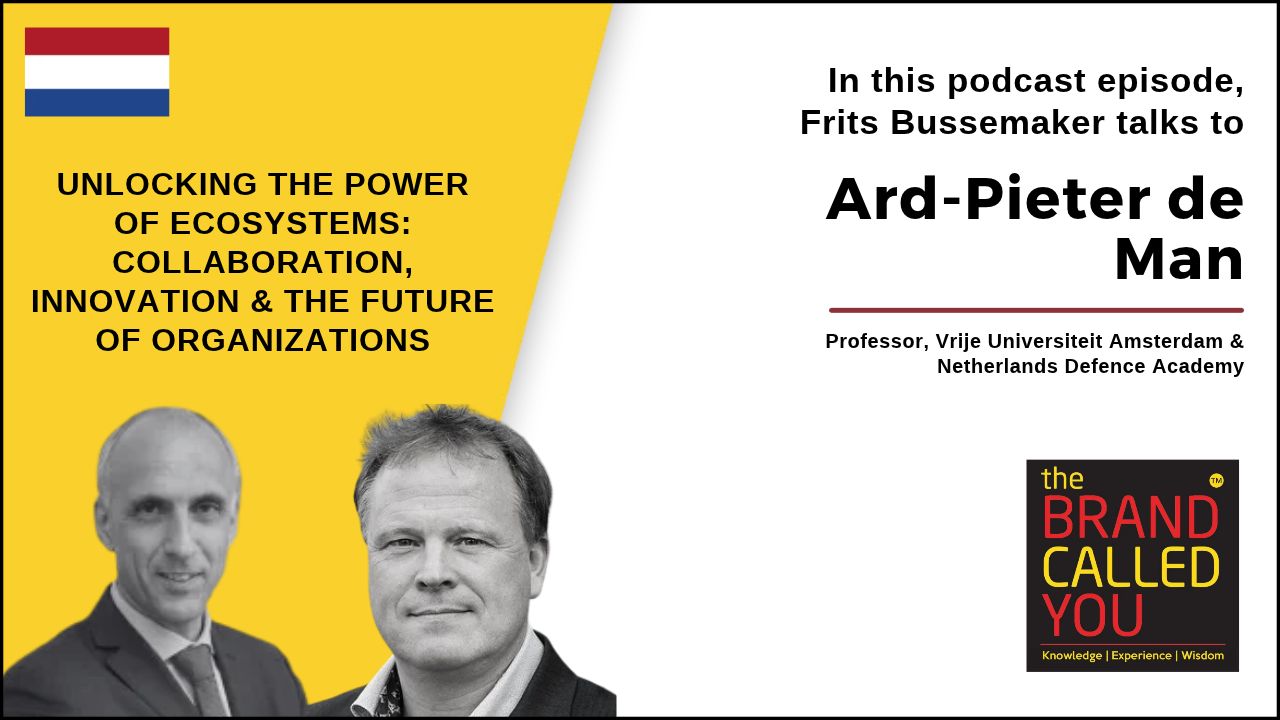
Insights from Prof. Ard-Pieter de Man, Vrije Universiteit Amsterdam & Netherlands Defence Academy
- Historical evolution of organizational collaboration since the 1990s.
- The shift from bilateral alliances to multi-partner platforms.
Podcast
Podcast: Play in new window | Download
Follow TBCY RSS
Overview
In this engaging episode of The Brand Called You, host Frits Bussemaker speaks with Ard-Pieter de Man, Professor at Vrije Universiteit Amsterdam and the Netherlands Defence Academy, about the growing importance of organizational ecosystems, alliances, and networks.
The conversation explores how technology, digital platforms, artificial intelligence, and specialized datasets are transforming collaboration between organizations. It also examines the importance of local knowledge, the balance between competition and cooperation, and the skills required to build and manage successful ecosystems.
From the Dutch agricultural sector to military innovation, the discussion highlights valuable lessons on partnership building, knowledge sharing, organizational learning, and long-term collaboration.
Whether you are an entrepreneur, business leader, student, or aspiring ecosystem professional, this episode offers practical insights into navigating the evolving world of interconnected organizations.
01:41 — Why Are Ecosystems and Alliances Gaining Attention?
- Historical evolution of organizational collaboration since the 1990s.
- The shift from bilateral alliances to multi-partner platforms.
- The role of digital technology in enabling and driving collaboration.
- The growing need for partnerships to accelerate innovation.
03:14 — What Drives the Rise of Ecosystems Beyond Technology?
- The increasing speed and diversity of technological development.
- The need to access diverse expertise through partnerships.
- Why companies cannot develop every required technology or capability internally.
04:06 — Does Technology Level or Distort the Playing Field?
- The dual impact of AI and emerging technologies.
- General knowledge versus specialized data as competitive advantages.
- The importance of developing unique, domain-specific datasets.
- The growing gap between organizations with different levels of access to data and resources.
07:03 — Can the Southern Hemisphere Compete in the AI Ecosystem?
- Limitations of large-scale AI models and the quality of their data.
- Opportunities to leverage specialized local knowledge in regions such as Africa and India.
- Kenya’s mobile payment data as an example of valuable, unique datasets.
- The potential of regional expertise to create competitive advantages.
08:26 — How Should We Define an Ecosystem?
- The growing overuse and ambiguity of the term “ecosystem.”
- Understanding innovation ecosystems and digital or platform ecosystems.
- Differences between multi-partner innovation networks and platform-based ecosystems.
- The importance of governance and relationships in successful ecosystems.
11:10 — Where Does the Ecosystem Metaphor Break Down?
- Comparing organizational ecosystems with biological ecosystems.
- Understanding how competition and collaboration coexist.
- Why both forces are necessary for organizational learning, innovation, and adaptation.
14:07 — Are Special Roles Needed to Manage Ecosystems?
- The importance of alliance managers and ecosystem managers.
- Developing a broad understanding of business.
- Building a collaborative mindset.
- Understanding partners’ interests, expectations, and needs.
15:30 — What Is the Best Career Path to Ecosystem Management?
- Building strong business or technical expertise early in one’s career.
- Seeking opportunities to participate in partnership activities.
- Learning through negotiations, partner evaluations, and collaborative projects.
- Gradually developing the experience needed to lead alliances and ecosystems.
18:28 — Are There Surprising Role Models for Effective Ecosystems?
- Lessons from the Dutch agricultural sector, particularly family-run greenhouse businesses.
- The importance of community learning and knowledge sharing.
- How collaboration helps businesses compete with global players.
- Developing a “collaboration gene” across generations.
21:22 — What Mistakes Do People Make When Building Alliances?
- Overemphasis on short-term deals rather than long-term relationships.
- Missing future opportunities by focusing only on immediate transactions.
- The importance of developing lasting partnerships and pursuing multiple collaborations.
- Building relationships that create sustained mutual benefits.
RESOURCES
Connect with Ard-Pieter de Man and explore his work and professional insights on LinkedIn.
ENJOYED THIS PODCAST?
To build and manage successful ecosystems, you need more than titles—you need people with a “collaboration gene.” These are individuals who can identify mutual benefits, navigate diverse interests, build trust, and create lasting partnerships.
Share your thoughts and perspectives in the comments!Would you love to give us 5 stars? ⭐⭐⭐⭐⭐ If yes, we’d greatly appreciate your review. Help us reach more people as we bring conversations with leaders, high achievers, and thought leaders from diverse backgrounds and nationalities. Excellence can come from anywhere. Stay informed and hear from emerging achievers and experts from around the world.
Stay updated with what’s shaping the world today through the latest The Brand Called You Podcast episode. Follow us on iTunes, Spotify, and Anchor.fm.
You can find us at:
Website: www.tbcy.in
Instagram: http://bit.ly/3HO7N06
Facebook:http://bit.ly/3YzJOaD
Twitter: http://bit.ly/3wMBOXK
LinkedIn: https://www.linkedin.com/company/tbcy/
YouTube: http://bit.ly/3jmBqfq
Chingari: https://chingari.io/tbcypodcast
Josh: http://bit.ly/3WWP0nB
Thanks for listening!
Profile
-
Ard-Pieter de Man is a Professor at Vrije Universiteit Amsterdam and the Netherlands Defence Academy.
-
Specializes in organizational ecosystems, strategic alliances, networks, and inter-organizational collaboration.
-
Explores how technology, digital platforms, AI, and specialized datasets are transforming partnerships and business ecosystems.

