
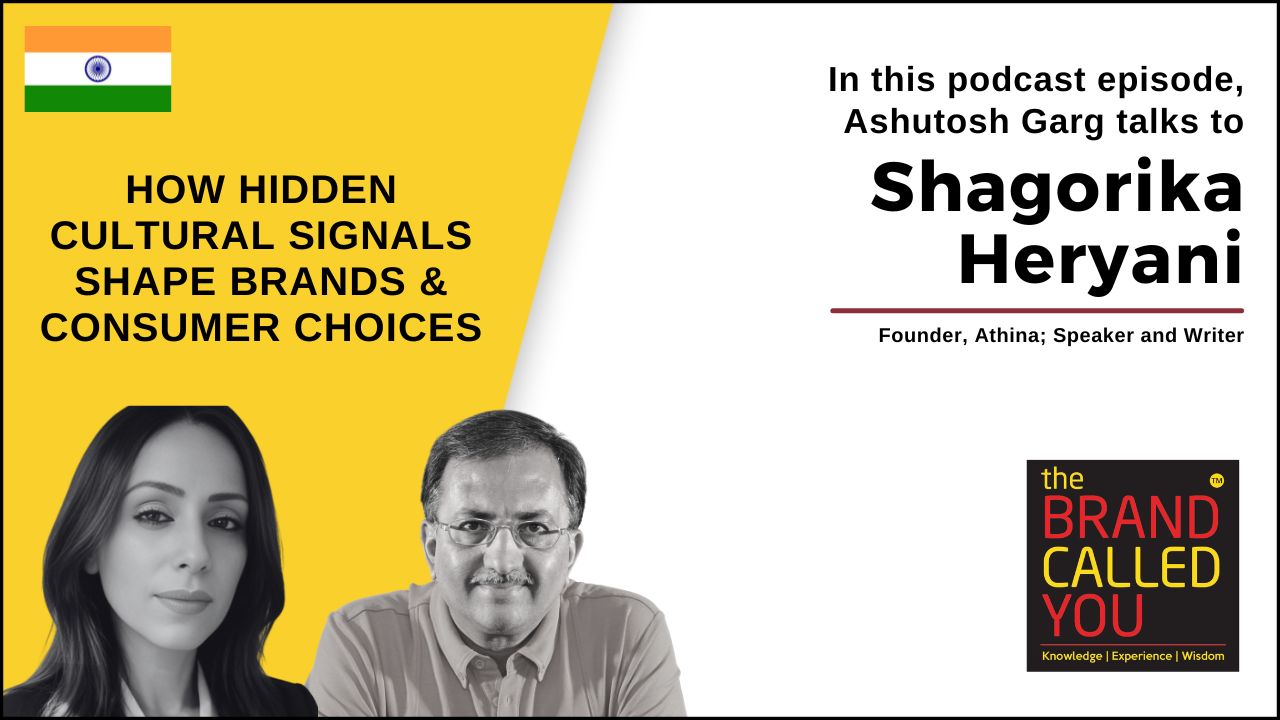
Consumer Behavior: Insights with Shagorika Heryani, Founder of Athina
- The traditional top-down model of cultural influence is no longer effective.
- Media fragmentation and the decentralization of culture have become the new reality.
Podcast
Podcast: Play in new window | Download
Follow TBCY RSS
Overview
In this insightful episode of The Brand Called You (TBCY), Shagorika Heryani, Founder of Athina, shares insights drawn from more than two decades of experience at the intersection of strategy, culture, and brand building. Drawing on her extensive work across India, the Middle East, and Southeast Asia, Shagorika explores the hidden forces shaping consumer behavior and offers practical lessons on cultural intelligence for brands striving to remain relevant in rapidly evolving markets.
02:26 – What hidden cultural signals do most brands miss today?
- The traditional top-down model of cultural influence is no longer effective.
- Media fragmentation and the decentralization of culture have become the new reality.
- India’s internet growth is being driven by regional audiences and local-language content.
- Cultural conversations are now decentralized, creating multiple tastemakers and influence centers.
- Hyper-specific communities—such as gaming, indie music, and wellness—are increasingly shaping culture.
- Rather than chasing the “mainstream,” brands should identify emerging cultural microcurrents.
06:09 – Why do some products suddenly feel inevitable, and what creates emotional attachment to brands?
- Products become inevitable when brands recognize cultural signals before others.
- Platforms like Zoom and Slack capitalized on major shifts during the pandemic by responding at the right moment.
- Emotional attachment develops when brands reflect consumers’ aspirational identities.
- Liquid Death is a powerful example of how bold branding and storytelling made healthy choices feel rebellious rather than preachy.
09:46 – How do culture and aspiration influence purchasing behavior in emerging markets like India?
- Indian consumers simultaneously embrace global aspirations and local cultural pride.
- The “Roots and Wings” paradox reflects the desire for status alongside deep-rooted financial prudence.
- Categories such as SUVs and beauty products demonstrate how consumers balance aspiration with practicality, and tradition with modernity.
- Successful brands embrace this complexity instead of trying to simplify it.
12:53 – How are social media platforms accelerating cultural change?
- Algorithmic amplification prioritizes emotionally charged content, often leading to overstimulation.
- The “global village” effect removes geographical barriers, allowing trends such as K-pop and Korean aesthetics to spread rapidly across markets like India.
- Social proof on digital platforms quickly normalizes behaviors that were once considered unconventional.
- Brands that chase only viral moments risk sacrificing authentic, long-term consumer relationships.
17:16 – What separates culturally intelligent companies from culturally tone-deaf organizations?
- Organizational culture is the foundation of cultural intelligence.
- Companies that embrace calculated risks are more likely to recognize and act on emerging cultural signals.
- Fear-driven organizations often suppress innovation, making them slower to respond and less culturally relevant.
19:09 – What can Indian brands teach the world about cultural relevance?
- India’s ability to adapt to cultural diversity has long been a competitive advantage.
- AI models trained primarily on English-language and Western datasets often struggle to capture India’s cultural nuances.
- Indian brands demonstrate how human insight and contextual understanding can outperform one-size-fits-all strategies.
22:28 – What ethical risks come with using cultural intelligence in branding?
- Marketing can increasingly be “weaponized” to exploit consumer anxieties and societal divisions.
- Cultural intelligence enables highly targeted messaging, which can be used either responsibly or manipulatively.
- Shagorika advocates for ethical decision-making and consciously avoids projects that could exploit consumer vulnerabilities.
RESOURCES:
Learn more about Shagorika Heryani: LinkedIn
Enjoyed this podcast?
Why do some products suddenly feel inevitable? Why do we form emotional connections with certain brands? It all comes down to culture—yet many brands are looking for signals in the wrong places.
Share your thoughts in the comments and help spread these insights within your network.
Would you love to give us 5 stars? ⭐⭐⭐⭐⭐ If yes, we’d greatly appreciate your review. Help us reach more people as we bring conversations with leaders, high achievers, and thought leaders from diverse backgrounds and nationalities. Excellence can come from anywhere. Stay informed and hear from emerging achievers and experts from around the world.
Stay updated with what’s shaping the world today through the latest The Brand Called You Podcast episode. Follow us on iTunes, Spotify, and Anchor.fm.
You can find us at:
Website: www.tbcy.in
Instagram: http://bit.ly/3HO7N06
Facebook:http://bit.ly/3YzJOaD
Twitter: http://bit.ly/3wMBOXK
LinkedIn: https://www.linkedin.com/company/tbcy/
YouTube: http://bit.ly/3jmBqfq
Chingari: https://chingari.io/tbcypodcast
Josh: http://bit.ly/3WWP0nB
Thanks for listening!
Profile
- Shagorika Heryani is the Founder of Athina, with over two decades of experience in strategy, culture, and brand building.
- She has advised organizations across India, the Middle East, and Southeast Asia, helping brands navigate diverse and rapidly evolving markets.
- Shagorika specializes in cultural intelligence, consumer behavior, and developing brand strategies that resonate with local and global audiences.

