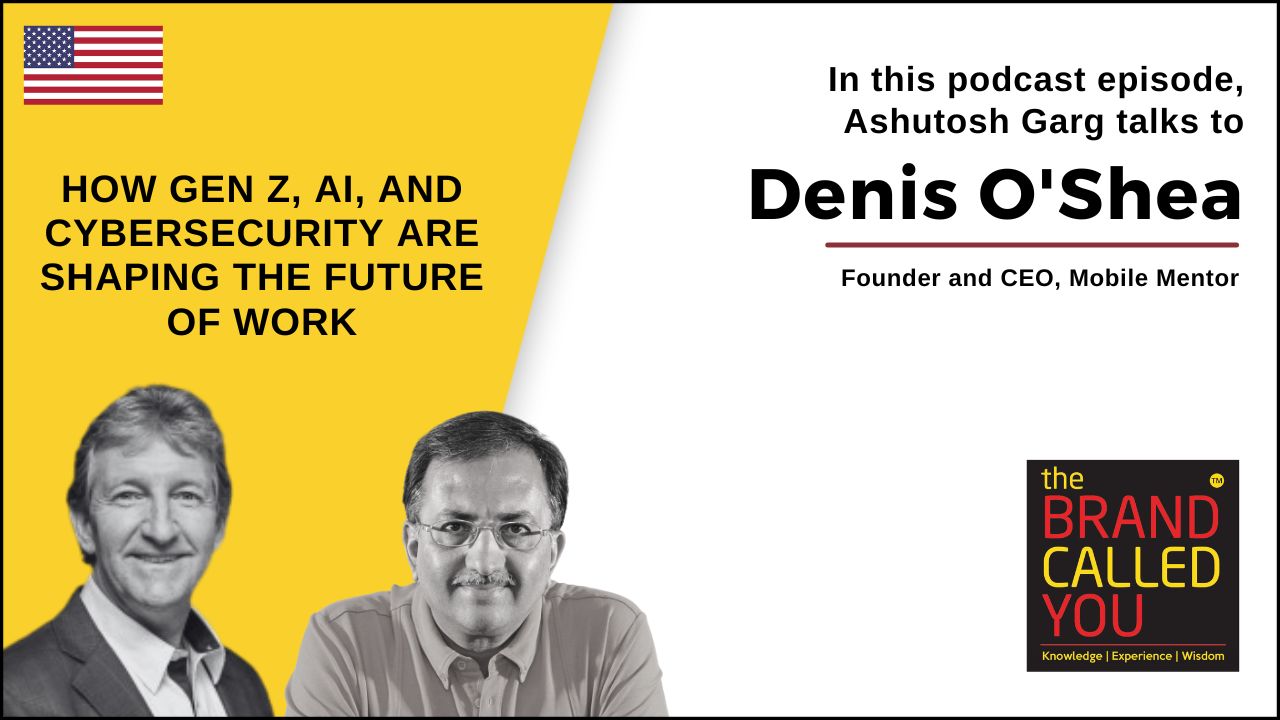
Insights from Dennis O’Shea, Founder & CEO of Mobile Mentor
- Early smartphones were underutilized, with people primarily using them to make calls and send texts.
- Dennis O’Shea left Nokia to help business leaders unlock the full potential of smartphones.
Podcast
Podcast: Play in new window | Download
Follow TBCY RSS
Overview
In this insightful episode of The Brand Called You, host Ashutosh Garg speaks with Dennis O’Shea, Founder and CEO of Mobile Mentor, about the evolution of mobile technology, AI strategies, cybersecurity, and the impact of Gen Z in the workplace. Packed with leadership insights and actionable takeaways, this conversation is a must-listen for entrepreneurs, technology leaders, and professionals preparing for an AI-driven world.
00:44-What problem was Mobile Mentor founded to solve, and how has its mission evolved?
- Early smartphones were underutilized, with people primarily using them to make calls and send texts.
- Dennis O’Shea left Nokia to help business leaders unlock the full potential of smartphones.
- Mobile Mentor’s initial focus was hands-on technology enablement, which has since evolved to include AI and cybersecurity.
02:06-What decisions shaped Mobile Mentor into a global company?
- Mobile Mentor made a strategic shift to become a Microsoft partner after being approached by Microsoft.
- The company focused on mastering Microsoft Intune to differentiate itself among 400,000 partners.
- Being named Microsoft’s Global Partner of the Year in 2021 helped propel the company’s growth.
04:09- Why do people remain the biggest differentiator in a technology-driven world?
- Mobile Mentor considers itself a people-focused business, not simply a technology vendor.
- Success comes from empowering employees to maximize the value of technology.
- Balancing security with productivity is critical, as excessive security restrictions can lead employees to adopt risky workarounds.
05:24-How do you keep innovating after 20 years?
- Hire talented people and give them autonomy.
- Follow a visionary-integrator leadership model, with the founder serving as the visionary and the president as the integrator.
- Focus on clear, long-term goals rather than micromanagement.
06:27-Why do most AI deployments fail to deliver results?
- MIT research suggests that 95% of AI initiatives fail to deliver meaningful ROI.
- Common pitfalls include a lack of organizational readiness, inadequate data security, unclear use cases, escalating costs, and unmanaged AI agents.
- Software development and content creation are notable areas where AI adoption has shown stronger results.
07:58-What separates successful AI-driven organizations from those that are simply experimenting?
- The five foundations of a successful AI strategy are defining clear use cases, securing critical data, providing comprehensive training, building the right system infrastructure for AI agents, and measuring ROI.
- Organizations need secure data and the right infrastructure to enable AI agents to integrate effectively with existing systems and workflows.
- A continuous feedback loop helps organizations measure results, scale what works, and discontinue initiatives that fail to deliver value.
10:17-What mistakes do CEOs make when approving AI investments?
- Fear of missing out (FOMO) can push CEOs to move too quickly without adequate preparation.
- Skipping foundational work can lead to tool sprawl, complexity, and unnecessary costs.
- As with cybersecurity, having too many tools can make technology environments difficult to manage effectively.
11:41- Why is Zero Trust becoming essential for cybersecurity?
- Zero Trust means trusting no device, person, or application by default and assuming that a breach could occur at any time.
- Traditional security relied heavily on protecting a defined office or network perimeter; today, security must follow users, devices, and identities wherever they operate.
- Zero Trust enables organizations to support secure and flexible work from virtually anywhere.
RESOURCES:
Learn more about Dennis O’Shea: LinkedIn
Enjoyed this podcast?
On cybersecurity, Zero Trust is no longer optional. No device, person, or application should receive automatic trust. Access should be tightly controlled, and “assume breach” should be the new norm.
Traditional cybersecurity focused on protecting a defined network perimeter. Today, security must extend across users, devices, applications, identities, and locations.
Share your thoughts in the comments and help spread these insights throughout your network.
Would you love to give us 5 stars? ⭐⭐⭐⭐⭐ If yes, we’d greatly appreciate your review. Help us reach more people as we bring conversations with leaders, high achievers, and thought leaders from diverse backgrounds and nationalities. Excellence can come from anywhere. Stay informed and hear from emerging achievers and experts from around the world.
Stay updated with what’s shaping the world today through the latest The Brand Called You Podcast episode. Follow us on iTunes, Spotify, and Anchor.fm.
You can find us at:
Website: www.tbcy.in
Instagram: http://bit.ly/3HO7N06
Facebook:http://bit.ly/3YzJOaD
Twitter: http://bit.ly/3wMBOXK
LinkedIn: https://www.linkedin.com/company/tbcy/
YouTube: http://bit.ly/3jmBqfq
Chingari: https://chingari.io/tbcypodcast
Josh: http://bit.ly/3WWP0nB
Thanks for listening!
Profile
- Dennis O’Shea is the Founder and CEO of Mobile Mentor, with extensive experience in mobile technology and digital transformation.
- He specializes in AI strategies, cybersecurity, enterprise mobility, and emerging technologies shaping the future of work.
- Dennis offers valuable leadership insights on adapting to technological change and building AI-ready organizations.

