
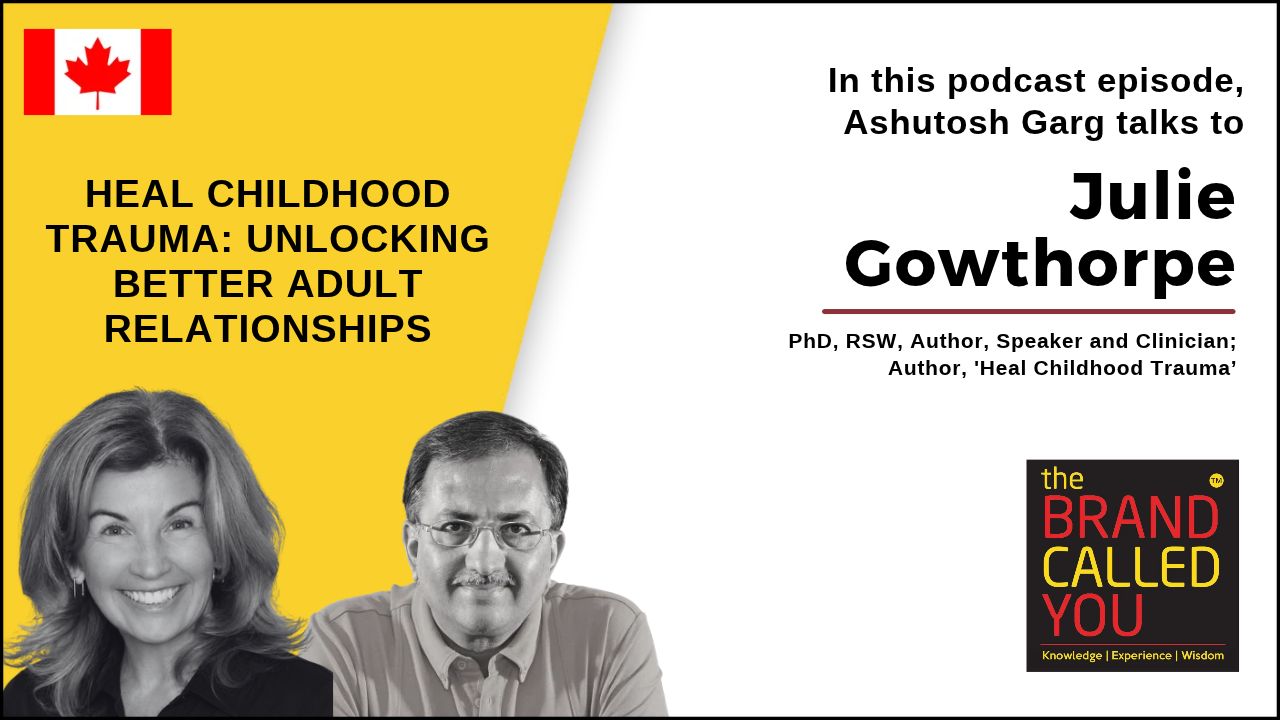
Insights from Julie Gowthorpe, PhD, RSW, Author, Speaker and Clinician
- Julie Gowthorpe’s gradual journey through education and private clinical practice
- Early experiences with anger, anxiety, relationship issues, and contentious family conflicts
Podcast
Podcast: Play in new window | Download
Follow TBCY RSS
Overview
In this enlightening episode of The Brand Called You, Ashutosh Garg sits down with Julie Gowthorpe, PhD, RSW, Author, Speaker and Clinician, to discuss her book, Heal Childhood Trauma: The Self-Nurturing Therapy Approach to Better Adult Relationships. Together, they explore the nuances of childhood trauma, how it can manifest in adult relationships, and the transformative potential of self-nurturing therapy.
Below is a breakdown of the podcast’s key topics, with specific timestamps, titles, and takeaway points.
00:53 | From Clinical Practice to Understanding Childhood Trauma
- Julie Gowthorpe’s gradual journey through education and private clinical practice
- Early experiences with anger, anxiety, relationship issues, and contentious family conflicts
- The realization that underlying issues often trace back to early experiences of safety, rejection, self-doubt, or loss
- An example of a client, “Carol,” whose anger masked deeper feelings of shame and vulnerability
03:13 | From Childhood Experiences to Self-Nurturing Therapy
- Julie Gowthorpe’s supportive childhood and reflections on adversity
- The story of a childhood friend whose trauma manifested physically, including temporary paralysis without an identifiable medical cause
- The realization that childhood trauma can often go unrecognized
- The development of an approach that helps adults nurture and respond to their own inner needs
06:17 | Understanding Secure and Insecure Attachment
- An explanation of secure and insecure attachment patterns
- How childhood experiences with caregivers shape adult responses to love, safety, and conflict
- The concept of “earned attachment” through self-nurturing and the development of internal safety
08:43 | The Wounded Child and the Functioning Adult
- An analogy of a successful adult driving with a distressed child in the back seat, representing unresolved inner-child wounds
- How the “kicking child” can influence adult self-worth, relationships, and emotional regulation
10:29 | The Mind-Body Connection in Trauma Healing
- The connection between the mind and body, including a reference to The Body Keeps the Score
- How physical symptoms can emerge when emotions remain unexpressed or unrecognized
- The importance of calming and regulating the body before addressing deeper emotional or cognitive issues
- Practical applications in both therapeutic and workplace settings
13:29 | Understanding Shame, Guilt, and Self-Compassion
- The distinction between guilt (“I did something bad”) and shame (“I am bad”)
- How perpetrators may attempt to impose shame on victims
- The importance of compassionate and nurturing approaches rather than traditional “tough love” attitudes
- A practical example drawn from pandemic experiences
16:02 | Repairing Self-Esteem Through Inner Healing
- Reflections on traditional self-esteem and assertiveness programs
- The need to heal the vulnerable inner part rather than focusing only on adult-level empowerment
- How nurturing the wounded inner child can contribute to a deeper sense of empowerment
17:54 | Healing as an Ongoing Journey
- Healing is a process rather than a one-time solution and involves ongoing growth
- Triggers and old thought patterns may still arise, but individuals can learn to reset and respond differently over time
- Healing can bring greater peace and contentment rather than completely erasing past wounds
19:20 | Moving from Emotional Survival to Thriving
- The shift from emotional survival to enjoying life’s journey
- Learning to trust oneself to manage conflict and regulate emotions
- Moving beyond fear and reactive patterns
20:29 | Honoring the Past Without Being Controlled by It
- Recognizing and honoring old coping mechanisms as strategies that once helped with survival
- Holding space for past experiences while integrating them and moving forward as an adult
- Understanding the importance of not allowing old wounds to dictate present behavior
RESOURCES
Learn more about Julie Gowthorpe: LinkedIn
ENJOYED THIS PODCAST?
Thriving means enjoying your journey—not living in constant survival mode, but trusting yourself to handle challenges with greater calm and confidence.
Share your thoughts in the comments and help spread these insights throughout your network.
Would you love to give us 5 stars? ⭐⭐⭐⭐⭐ If yes, we’d greatly appreciate your review. Help us reach more people as we bring conversations with leaders, high achievers, and thought leaders from diverse backgrounds and nationalities. Excellence can come from anywhere. Stay informed and hear from emerging achievers and experts from around the world.
Stay updated with what’s shaping the world today through the latest The Brand Called You Podcast episode. Follow us on iTunes, Spotify, and Anchor.fm.
You can find us at:
Website: www.tbcy.in
Instagram: http://bit.ly/3HO7N06
Facebook:http://bit.ly/3YzJOaD
Twitter: http://bit.ly/3wMBOXK
LinkedIn: https://www.linkedin.com/company/tbcy/
YouTube: http://bit.ly/3jmBqfq
Chingari: https://chingari.io/tbcypodcast
Josh: http://bit.ly/3WWP0nB
Thanks for listening!
Profile
- Julie Gowthorpe, PhD, RSW is an author, speaker, and clinician specializing in childhood trauma and adult relationships.
- She is the author of Heal Childhood Trauma: The Self-Nurturing Therapy Approach to Better Adult Relationships.
- Her work explores how childhood experiences can influence adult relationships, emotional patterns, and personal development.

