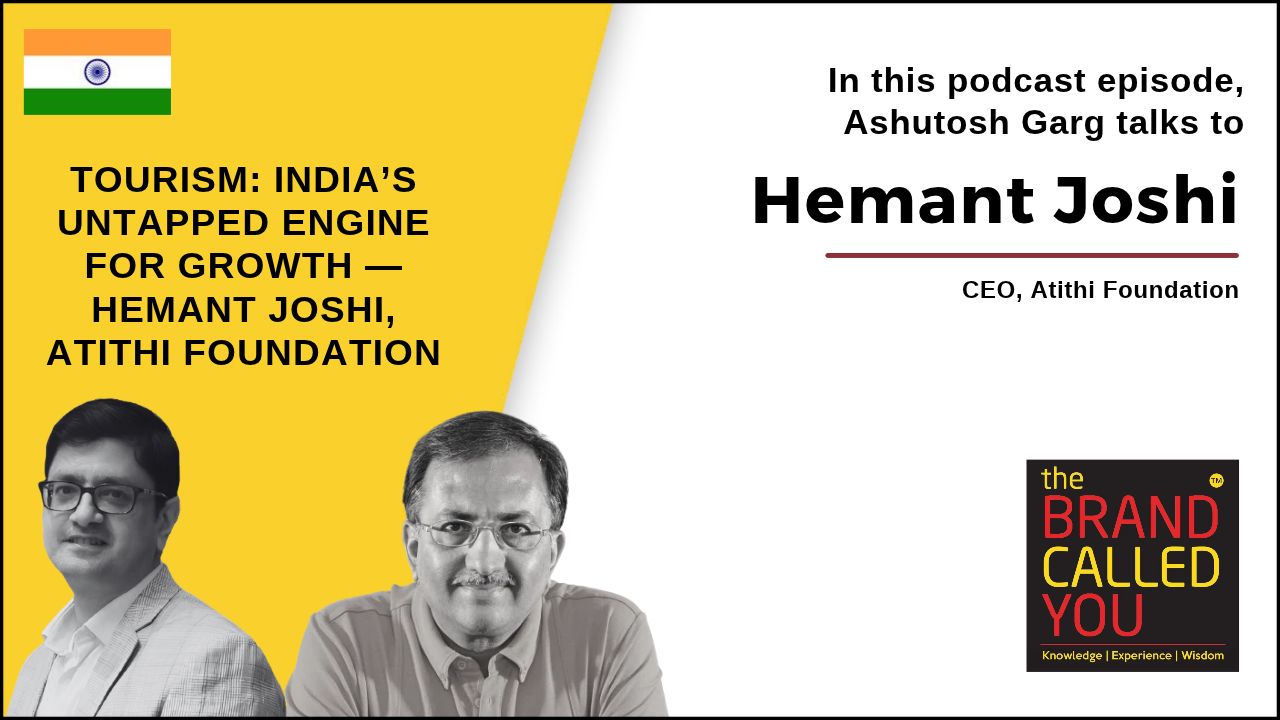
Empowering India Through Tourism: Hemant Joshi, CEO, Atithi Foundation
- From his army family roots and grassroots development experience to consulting and institution-building.
- The importance of understanding and designing systems.
Podcast
Podcast: Play in new window | Download
Follow TBCY RSS
Overview
In this insightful episode of The Brand Called You, host Ashutosh Garg sits down with Hemant Joshi, CEO of Atithi Foundation, to explore the transformative power of tourism in India. With extensive experience spanning grassroots development, consulting, and institution-building, Hemant Joshi shares practical insights on leveraging tourism for economic growth and community empowerment. The conversation brings together personal experiences, global examples, and actionable policy recommendations.
00:44 – What connects Hemant Joshi’s diverse career chapters?
- From his army family roots and grassroots development experience to consulting and institution-building.
- The importance of understanding and designing systems.
- Building institutions that can deliver impact at scale.
02:43 – Which is harder: advising change or creating it yourself?
- The challenges involved in both advisory roles and institution-building.
- The greater accountability that comes with building and leading organizations.
03:30 – Why was Atithi Foundation created, and what gap does it address?
- Atithi Foundation is part of the Convergence Foundation network.
- Tourism as a lever for job creation and economic growth, rather than just leisure.
- Tourism’s unique potential to generate local employment and economic activity.
04:48 – How is tourism an economic development strategy?
- Tourism brings external money into local economies.
- Its economic ripple effect benefits hotels, guides, restaurants, handicraft businesses, and other services.
- Multiple sectors can benefit from increased tourism activity.
06:01 – Which countries demonstrate strong tourism-led development, and what can India learn?
- Singapore: Data-driven planning and a structured approach to tourism development.
- Vietnam: Coordinated promotion, improved visa access, and stronger connectivity.
- Mauritius: Tourism positioned at the core of its economic strategy.
- There is no one-size-fits-all model, but relevant practices can be adapted to India’s context.
10:12 – How can local communities benefit from tourism instead of being mere spectators?
- Designing tourism models that enable end-to-end community participation.
- Creating employment opportunities across the value chain, from guides and hospitality to local services.
- Ensuring that local communities benefit directly is essential for a destination’s long-term success.
12:01 – Can tourism preserve culture while still being commercialized?
- Cultural preservation and commercialization can go hand in hand when managed responsibly.
- Long-term preservation often requires viable economic returns.
- Responsible commercialization can create benefits for both cultural heritage and the local economy.
13:31 – Can tourism reduce rural migration in India?
- Tourism can contribute to reducing migration but cannot be the sole solution.
- Many tourism-related jobs are seasonal, making sustainable livelihoods essential.
14:28 – Why do tourism policies often fail at the implementation level?
- Fragmented responsibilities across ministries and sectors.
- Limited coordination among private, public, and community stakeholders.
- Examples such as Vietnam demonstrate the value of system-wide collaboration.
15:25 – Can NGOs, governments, and businesses genuinely collaborate in tourism?
- Public-private partnerships and collaborative models can help bring stakeholders together.
- Destination Management Organizations (DMOs) can help coordinate and streamline the efforts of different stakeholders.
RESOURCES
Learn more about Hemant Joshi: LinkedIn
ENJOYED THIS PODCAST?
How can communities benefit directly from tourism?
Not by being spectators. Local communities can participate across the tourism value chain—from transportation and food to local markets, adventure activities, and guiding services—so they can benefit as tourism grows.
Share your thoughts in the comments and help spread these insights throughout your network.
Would you love to give us 5 stars? ⭐⭐⭐⭐⭐ If yes, we’d greatly appreciate your review. Help us reach more people as we bring conversations with leaders, high achievers, and thought leaders from diverse backgrounds and nationalities. Excellence can come from anywhere. Stay informed and hear from emerging achievers and experts from around the world.
Stay updated with what’s shaping the world today through the latest The Brand Called You Podcast episode. Follow us on iTunes, Spotify, and Anchor.fm.
You can find us at:
Website: www.tbcy.in
Instagram: http://bit.ly/3HO7N06
Facebook:http://bit.ly/3YzJOaD
Twitter: http://bit.ly/3wMBOXK
LinkedIn: https://www.linkedin.com/company/tbcy/
YouTube: http://bit.ly/3jmBqfq
Chingari: https://chingari.io/tbcypodcast
Josh: http://bit.ly/3WWP0nB
Thanks for listening!
Profile
- Hemant Joshi is the CEO of Atithi Foundation, with extensive experience in grassroots development, consulting, and institution-building.
- He is passionate about leveraging tourism as a catalyst for economic growth and community empowerment in India.
- His work connects tourism, local development, policy, and sustainable economic opportunities to create meaningful community impact.

