Innovating Beyond Boundaries: Graham Cross on Leadership and Open Innovation
- His early enthusiasm for creating and assembling things from scratch.
- His desire to apply scientific knowledge to practical, real-world problems.
Podcast
Podcast: Play in new window | Download
Follow TBCY RSS
Overview
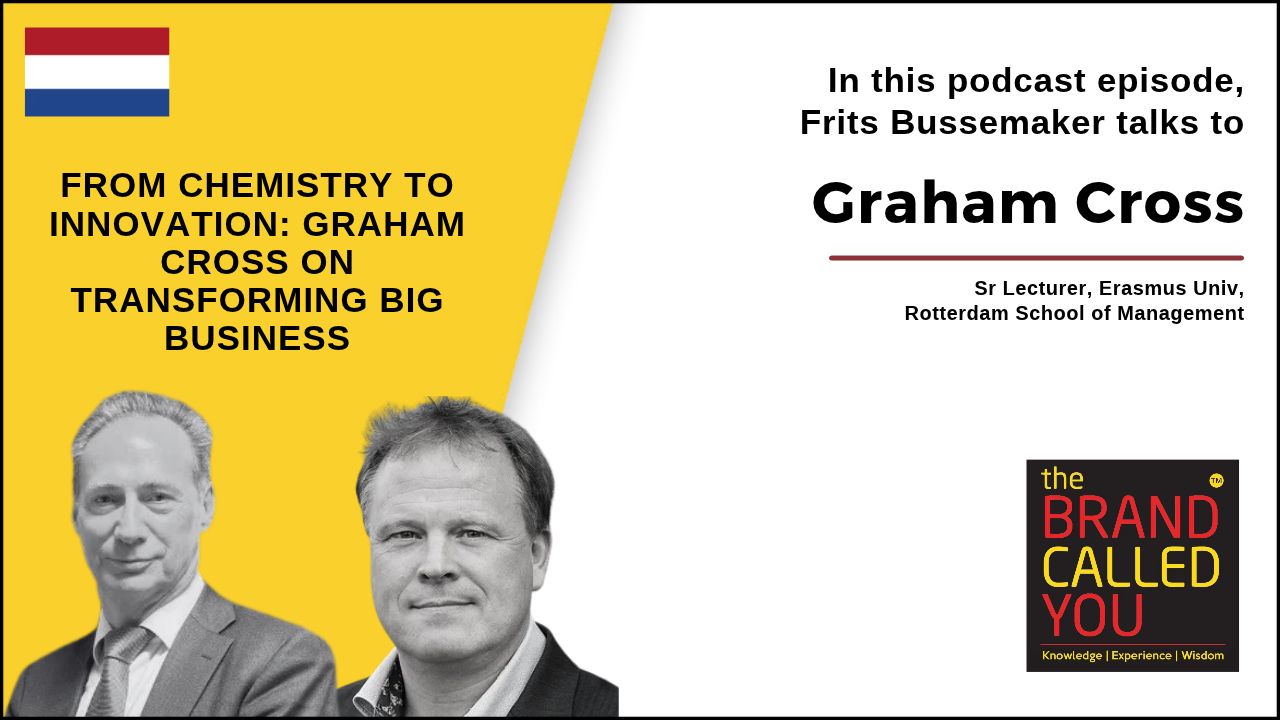
In this insightful episode of The Brand Called You (TBCY), host Frits Bussemaker speaks with Graham Cross, Senior Lecturer at Rotterdam School of Management, Erasmus University Rotterdam, and Strategic Alliance Director at the Ecosystem Thinking Institute.
Drawing on more than 30 years of experience at Unilever, including his role as Global Director of Innovation, Graham shares his journey from hands-on scientific research to leading innovation in a global organization. He explores how businesses can move beyond traditional ways of working, embrace external collaboration, and turn organizational challenges into opportunities for growth.
01:17 – How did Graham’s childhood passion for building things shape his career in innovation?
- His early enthusiasm for creating and assembling things from scratch.
- His desire to apply scientific knowledge to practical, real-world problems.
- His transition from chemistry research to practical applications.
03:13 – What drives consumer decisions, and why can small details matter more than technical features?
- How factors such as product colour can influence consumer preferences more than technical specifications.
- Why innovation must remain relevant to changing consumer expectations.
- How consumer priorities can differ from the priorities of the people developing a product.
05:07 – Why is understanding customer needs essential, even in technical R&D roles?
- The challenges of introducing customer-focused thinking into traditional R&D environments.
- Graham’s efforts to understand end users and align product development with their needs.
- The importance of developing complete product offerings rather than focusing solely on new molecules or technical improvements.
08:15 – How did Unilever move from product development to consumer-driven innovation?
- The distinction between creating a product and solving a consumer problem.
- The importance of understanding the tasks consumers want to accomplish, often described as their “jobs to be done.”
- Why technical improvements alone do not always translate into meaningful innovation.
09:15 – What organizational challenges arise when coordinating innovation across departments?
- The challenges created by separate innovation, R&D, marketing, and supply chain functions.
- Efforts to integrate these functions into a more coordinated process.
- The use of stage-gate innovation models informed by research and established innovation practices.
13:37 – How did Unilever establish global innovation centres?
- The development of dedicated innovation centres around the world.
- The shift from a headquarters-driven model towards greater local implementation and decision-making.
- The importance of coordinating central strategy with local expertise.
16:12 – Why is external collaboration essential, and how can excessive secrecy hinder innovation?
- How a closed approach can limit opportunities for external collaboration.
- Why challenges sometimes require businesses to seek expertise beyond their own teams.
- The value of combining internal knowledge with external capabilities.
18:56 – What does it take to move from closed to open innovation?
- Unilever’s decade-long journey towards a more open innovation model.
- The leadership shift from assuming the organization has all the answers to coordinating expertise and resources globally.
- The importance of selective, well-managed collaboration rather than unrestricted sharing.
22:21 – How did open innovation reshape Unilever’s supply chain?
- The increasing use of external partners for manufacturing and, in some cases, development.
- The growing role of suppliers as active contributors to innovation.
- The emergence of closer co-development relationships and shared risks and rewards.
28:08 – What can organizations learn from setbacks during transformation?
- Why setbacks can become valuable learning opportunities.
- How resistance can prompt organizations to reassess their assumptions and approaches.
- The importance of coordinating resources and collaboration rather than relying solely on individual execution.
RESOURCES
- Learn more about Graham Cross on LinkedIn.
ENJOYED THIS PODCAST?
In many traditional organizations, the mindset was simply to “do your job.” Graham Cross challenged this approach by encouraging teams to understand their customers and develop innovations that address genuine needs—not just complete technical tasks in the lab.
That is where meaningful progress begins.
Share your thoughts in the comments and help spread these insights across your network.
Would you love to give us 5 stars? ⭐⭐⭐⭐⭐ If yes, we’d greatly appreciate your review. Help us reach more people as we bring conversations with leaders, high achievers, and thought leaders from diverse backgrounds and nationalities. Excellence can come from anywhere. Stay informed and hear from emerging achievers and experts from around the world.
Stay updated with what’s shaping the world today through the latest The Brand Called You Podcast episode. Follow us on iTunes, Spotify, and Anchor.fm.
You can find us at:
Website: www.tbcy.in
Instagram: http://bit.ly/3HO7N06
Facebook:http://bit.ly/3YzJOaD
Twitter: http://bit.ly/3wMBOXK
LinkedIn: https://www.linkedin.com/company/tbcy/
YouTube: http://bit.ly/3jmBqfq
Chingari: https://chingari.io/tbcypodcast
Josh: http://bit.ly/3WWP0nB
Thanks for listening!
Profile
-
Graham Cross is a Senior Lecturer at Rotterdam School of Management, Erasmus University Rotterdam, and Strategic Alliance Director at the Ecosystem Thinking Institute.
-
Brings over 30 years of experience at Unilever, including serving as Global Director of Innovation.
-
Combines a background in scientific research with expertise in corporate innovation and strategic leadership.

