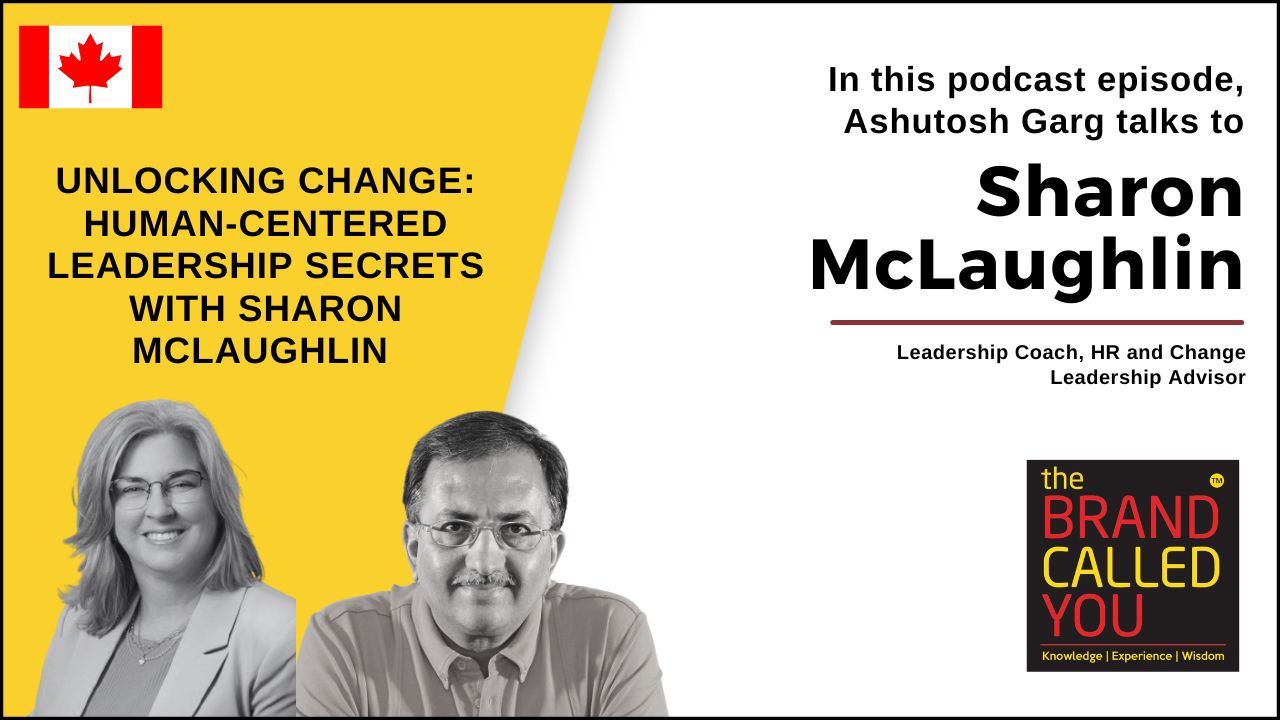
Insights from Sharon McLaughlin, Leadership Coach & HR and Change Leadership Advisor
- Change often feels like it is being done to them.
- A loss of control can lead to unfounded stories and assumptions.
Podcast
Podcast: Play in new window | Download
Follow TBCY RSS
Overview
In this enlightening episode of The Brand Called You, host Ashutosh Garg sits down with Sharon McLaughlin, Leadership Coach, HR and Change Leadership Advisor, from Ottawa, Canada. Together, they delve into the intricacies of navigating change, developing leadership skills in today’s evolving workplace, and the importance of self-awareness and emotional intelligence.
00:44 | Why do people resist change?
- Change often feels like it is being done to them.
- A loss of control can lead to unfounded stories and assumptions.
- Involving people and communicating clearly can help ease transitions.
01:37 | What mistakes do leaders make when communicating organizational change?
- Leaders often focus too much on outcomes and deadlines.
- They may neglect the individual transition experience.
- A lack of communication can create uncertainty when more communication is needed.
02:33 | Why are some organizations more adaptable than others?
- Organizational culture is key.
- People-focused cultures achieve better change outcomes.
- Confident and supported employees drive successful change.
03:26 | How should leaders balance empathy with accountability?
- Balance empathy with clear expectations and results.
- Guide people without relying on negative authority.
- Recognize that each individual experiences change differently.
04:44 | What does it mean that “meaningful change begins within”?
- Confidence and self-awareness are foundations for navigating change.
- Emotional intelligence is crucial for leading both oneself and others through transitions.
05:59 | Why do successful leaders struggle with personal or career transitions?
- Identity loss and a lack of preparedness can make transitions difficult.
- Smooth transitions are easier for those who understand their strengths and values.
- Struggles often stem from unexpected change and a perceived loss of control.
08:36 | What fears do leaders bring to coaching?
- Emerging leaders often face imposter syndrome and fear of the unknown.
- Moving from an individual contributor role to people leadership is a common challenge.
10:38 | How do you distinguish between a temporary setback and a signal for major career change?
- It begins with deep self-understanding.
- An accumulation of “bad days” can signal a need for reflection or change.
- Temporary setbacks can be distinguished from persistent dissatisfaction.
12:18 | How can leaders develop self-awareness without becoming overly self-critical?
- Emotional intelligence and tools like Gallup CliftonStrengths can guide self-reflection.
- Coaching helps clarify strengths, values, and the type of work leaders genuinely want.
14:22 | What workforce challenges does AI create for the next decade?
- There is a risk of losing human connection in the workplace.
- Leadership and coaching remain human-centric and vital.
- Ongoing mentoring and human guidance will remain important despite technological advances.
16:41 | What leadership capabilities matter most in today’s diverse, hybrid workplace?
- Emotional intelligence is paramount.
- Leaders must recognize and adapt to individual differences in work styles and needs.
- Pacing change appropriately can help prevent fatigue and disengagement.
19:14 | What does great leadership look like in a world of constant change?
- A human-centered and individualized approach.
- Visionary communication and the creation of safe spaces for dialogue.
- Effective pacing and planning to avoid change saturation.
21:02 | Is leadership an innate quality or a learned skill?
- Not all leaders are naturally great at leadership, and individual motivation varies.
- Leadership is a privilege, not merely a job title.
- Leaders must be conscious of the experience they create and the trust they build.
RESOURCES:
Learn more about Sharon McLaughlin: LinkedIn
Enjoyed this podcast?
It’s all about culture. Organizations that focus on people first—not just outcomes—create trust and confidence. If your people are happy, they’ll make change work for you.
Share your thoughts in the comments and help spread these insights throughout your network.
Would you love to give us 5 stars? ⭐⭐⭐⭐⭐ If yes, we’d greatly appreciate your review. Help us reach more people as we bring conversations with leaders, high achievers, and thought leaders from diverse backgrounds and nationalities. Excellence can come from anywhere. Stay informed and hear from emerging achievers and experts from around the world.
Stay updated with what’s shaping the world today through the latest The Brand Called You Podcast episode. Follow us on iTunes, Spotify, and Anchor.fm.
You can find us at:
Website: www.tbcy.in
Instagram: http://bit.ly/3HO7N06
Facebook:http://bit.ly/3YzJOaD
Twitter: http://bit.ly/3wMBOXK
LinkedIn: https://www.linkedin.com/company/tbcy/
YouTube: http://bit.ly/3jmBqfq
Chingari: https://chingari.io/tbcypodcast
Josh: http://bit.ly/3WWP0nB
Thanks for listening!
Profile
- Leading Through Change: Helps leaders navigate workplace transitions with clarity, confidence, and adaptability.
- Leadership Development: Focuses on building essential leadership skills for today’s evolving work environment.
- Self-Awareness: Highlights understanding personal strengths, emotions, and triggers as a foundation for effective leadership.

