
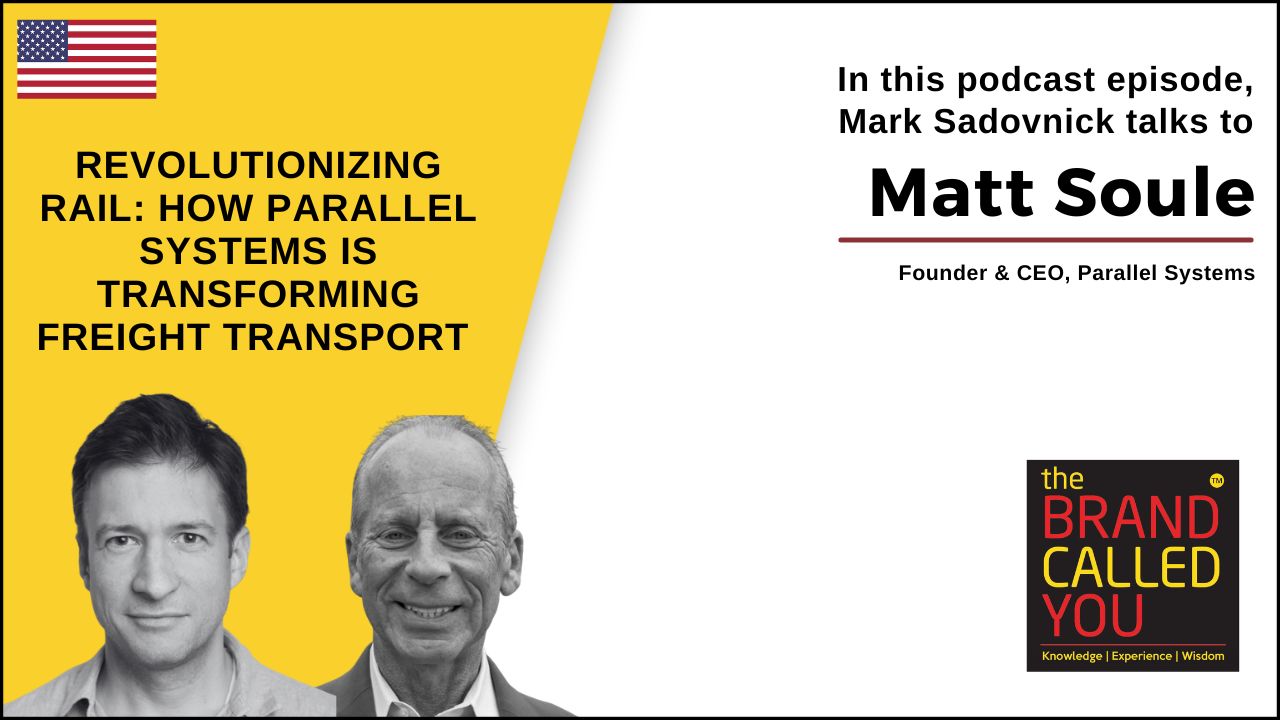
Matt Soule, Co-Founder & CEO of Parallel Systems, on Innovation in Transportation
- Grew up fascinated by technology and engineering, playing with Legos and leading a college solar car team.
- Developed a strong interest in hard work and solving difficult problems through cross-country running and marathons.
Podcast
Podcast: Play in new window | Download
Follow TBCY RSS
Overview
In this insightful episode of the Leaders Who Care series, the conversation focused on the journey, vision, and impact of Parallel Systems, a company aiming to transform freight rail transportation. The discussion explored personal background, lessons from aerospace and SpaceX, and how mission-driven innovation can reshape traditional industries like rail.
01:12 | Who Is Matt Soule, and What Influenced His Path to Engineering?
- Grew up fascinated by technology and engineering, playing with Legos and leading a college solar car team.
- Developed a strong interest in hard work and solving difficult problems through cross-country running and marathons.
- Shared the memorable story of arriving in Los Angeles in a solar-powered car rather than by plane or a conventional car.
- Reflected on his close-knit upbringing in Connecticut and how his family eventually spread across different states.
08:27 | How Did Hands-On Experience Shape His Early Career in Aerospace?
- Started his career at Moog, attracted by its diverse technical challenges and hands-on manufacturing experience.
- Learned the importance of understanding how things are built before designing them.
- Developed what he describes as “scar tissue” from experiencing real-world manufacturing challenges firsthand.
- Learned valuable lessons about failure, risk, and the importance of learning through experience.
13:07 | What Major Differences Did He Find at Lockheed Martin and Northrop Grumman?
- Moved to larger aerospace companies to work on complete systems, including rockets and aircraft.
- Experienced a less dynamic work environment during an economic downturn, which led to feelings of boredom and uncertainty.
- Pursued graduate studies at USC before making a pivotal move to SpaceX after connecting with early employees.
- Gained insights into how strong company cultures and visionary leadership can drive meaningful innovation.
16:04 | What Was It Like Joining SpaceX in Its Early Days?
- Joined SpaceX after the company’s first failed Falcon 1 launch, attracted by its ambition to push technological boundaries.
- Despite the risks and demanding work environment, found significant personal growth and fulfillment in its high-ownership culture.
- Reflected on risk-taking, career decisions, and the importance of finding the right fit beyond salary or brand recognition.
20:00 | How Did the Idea for Parallel Systems Originate?
- Inspired by the transformative impact of mission-driven work at SpaceX.
- Wanted to revitalize overlooked industries and saw significant environmental and efficiency opportunities in the US rail industry.
- Focused on the intersection of climate, transportation, and technology.
- Viewed rail as the original technology industry, while recognizing the need for fresh thinking and innovation.
26:19 | What Challenges and Opportunities Exist in Freight Rail Today?
- Traditional US rail systems were designed around massive trains with centralized power, requiring large terminals and costly drayage—the short-haul trucking required to move freight to and from rail terminals.
- Rail is generally cost-competitive for longer-distance shipments, limiting its use for shorter routes.
- Modern logistics requires greater reliability and precise delivery windows, areas where traditional rail systems can struggle.
- Parallel Systems’ autonomous, self-propelled railcars aim to provide truck-like economics and greater flexibility while reducing drayage and improving service quality.
31:43 | What Stage Is Parallel Systems At Now, and What Impact Could It Have?
- Running active pilot programs in Georgia in the US and Western Australia, working with Genesee & Wyoming and ARC Infrastructure.
- Developing third-generation vehicles, with commercial rollout targeted for the following year.
- The business model focuses on selling its technology to railroads, which can then serve shippers such as Amazon and UPS.
- The broader vision is to make rail more competitive on shorter routes while reducing highway congestion and CO₂ emissions.
RESOURCES:
Learn more about Matt Soule: LinkedIn
Enjoyed This Podcast?
Several important points were raised throughout the conversation, including how a powerful mission can attract and inspire top talent. This sense of purpose was particularly evident at SpaceX, where pushing boundaries was part of the everyday culture. Despite setbacks and near-failures, perseverance remained essential to achieving ambitious goals.
Share your thoughts in the comments and help spread these insights throughout your network.
Would you love to give us 5 stars? ⭐⭐⭐⭐⭐ If yes, we’d greatly appreciate your review. Help us reach more people as we bring conversations with leaders, high achievers, and thought leaders from diverse backgrounds and nationalities. Excellence can come from anywhere. Stay informed and hear from emerging achievers and experts from around the world.
Stay updated with what’s shaping the world today through the latest The Brand Called You Podcast episode. Follow us on iTunes, Spotify, and Anchor.fm.
You can find us at:
Website: www.tbcy.in
Instagram: http://bit.ly/3HO7N06
Facebook:http://bit.ly/3YzJOaD
Twitter: http://bit.ly/3wMBOXK
LinkedIn: https://www.linkedin.com/company/tbcy/
YouTube: http://bit.ly/3jmBqfq
Chingari: https://chingari.io/tbcypodcast
Josh: http://bit.ly/3WWP0nB
Thanks for listening!
Profile
- Transforming Freight Rail: Exploring how Parallel Systems is reimagining traditional freight transportation through innovative technology.
- Aerospace Experience: Drawing on valuable lessons from aerospace and SpaceX to approach complex transportation challenges differently.
- Mission-Driven Innovation: Demonstrating how a clear mission can inspire breakthrough solutions in established industries.

