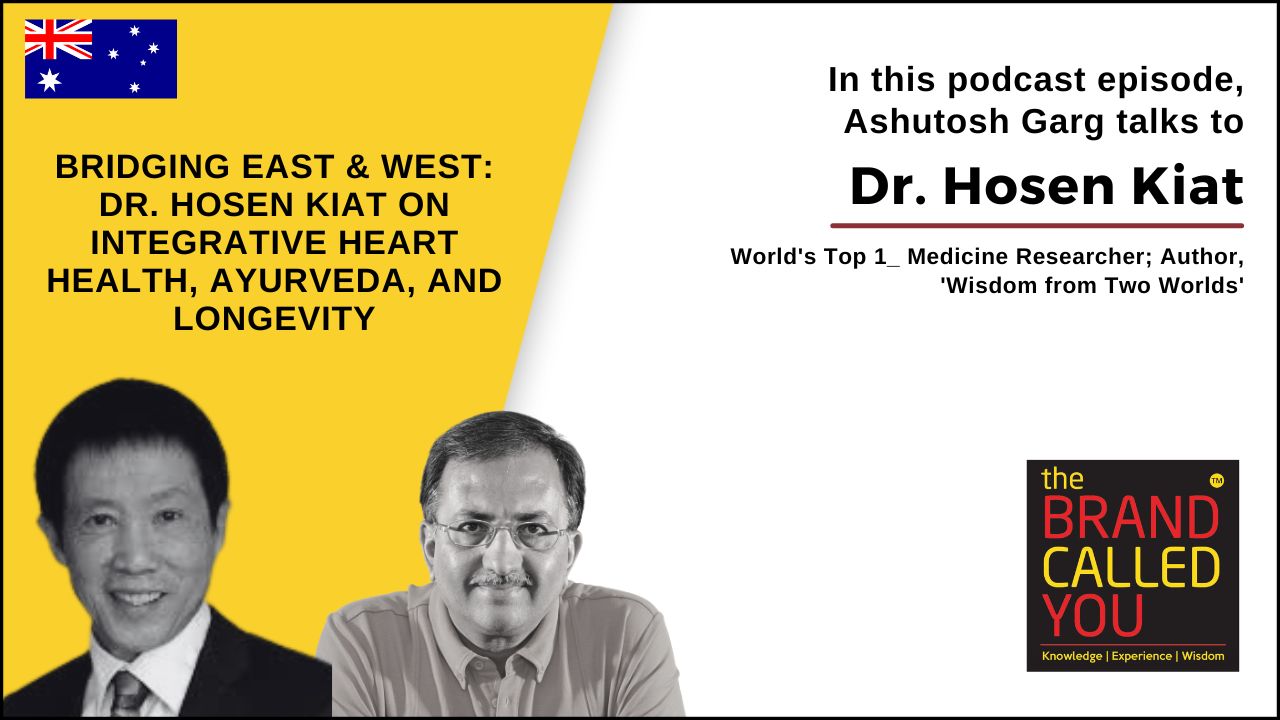
Dr. Hosen Kiat: World-Renowned Cardiologist on Bridging Eastern and Western Healing Traditions
- Dr Hosen Kiat’s upbringing between Jakarta and Melbourne, and the cultural expectation for top science students to enter medicine.
- How his calm demeanor during high-pressure situations led mentors to guide him toward cardiology.
Podcast
Podcast: Play in new window | Download
Follow TBCY RSS
Overview
In this enlightening episode of TBCY, host Ashutosh Garg speaks with world-renowned cardiologist, researcher, and author Dr Hosen Kiat about his journey in medicine, blending Eastern and Western traditions, and living a meaningful, healthier life. Below is a blog-style summary featuring key moments, each presented as a question with a timestamp and a bullet-point breakdown of what’s discussed.
00:00:50- What inspired Dr Hosen Kiat to pursue medicine and cardiology?
- Dr Hosen Kiat’s upbringing between Jakarta and Melbourne, and the cultural expectation for top science students to enter medicine.
- How his calm demeanor during high-pressure situations led mentors to guide him toward cardiology.
- The lack of a single defining “aha moment” but rather a combination of opportunity and personal fit.
00:04:03- What drives Dr Kiat to excel as a top 1% clinical medicine researcher?
- An innate curiosity from childhood that naturally aligned with the complexity of medicine.
- The process of research as a systematic way to answer countless questions about the human body.
- The joy in solving patient-centered medical challenges through research.
00:05:23- Why did Dr Kiat begin integrating Eastern and Western healing traditions?
- Realizing Western medicine’s limits, especially with chronic and preventive care.
- Early influences from his Indonesian heritage: herbal remedies, meditation, acupuncture.
- The importance of evidence-based validation and considering Eastern practices as complementary—not alternative—to Western medicine.
00:10:12- How do practices like Tai Chi and Ganoderma lucidum support heart health and prevention?
- Recent clinical studies showing Tai Chi’s additive benefit for cardiac rehabilitation and overall quality of life.
- The physiological benefits of movements that lower stress responses.
- Use of Ganoderma lucidum (a medicinal mushroom) for immune modulation and metabolic support, emblematic of preventative traditions in Eastern medicine.
00:14:24- What is the future of personalized, integrative medicine?
- The necessity of tailoring health strategies—exercise, diet, prevention—to the individual.
- Emphasis on practicing medicine that is evidence-based, ethical, and fitting for the person, regardless of cultural origin.
RESOURCES:
Learn more about Dr Hosen Kiat: LinkedIn
Enjoyed this podcast?
On personalized medicine: “Your strategy for good health is your own package.” Genetics, exercise, food, mental well-being—all tailored to YOU. The future? Evidence-based, ethical, and CUSTOMIZED care. #PersonalizedMedicine. Share your thoughts in the comments and spread these insights with friends!
Would you love to give us 5 stars? ⭐⭐⭐⭐⭐ If yes, we’d greatly appreciate your review. Help us reach more people to keep them in the know as we talk to leaders, high achievers, and thought leaders from diverse backgrounds and nationalities. Excellence can come from anywhere. Stay in the know, and hear from emergent high achievers and experts.
Stay updated with what’s shaping the world today through the latest The Brand Called You Podcast episode. Follow us on iTunes, Spotify, and Anchor.fm.
You can find us at:
Website: www.tbcy.in
Instagram: http://bit.ly/3HO7N06
Facebook:http://bit.ly/3YzJOaD
Twitter: http://bit.ly/3wMBOXK
LinkedIn: https://www.linkedin.com/company/tbcy/
YouTube: http://bit.ly/3jmBqfq
Chingari: https://chingari.io/tbcypodcast
Josh: http://bit.ly/3WWP0nB
Thanks for listening!
Profile
- Dr Hosen Kiat’s upbringing between Jakarta and Melbourne, and the cultural expectation for top science students to enter medicine.
- How his calm demeanor during high-pressure situations led mentors to guide him toward cardiology.
- The lack of a single defining “aha moment” but rather a combination of opportunity and personal fit.

