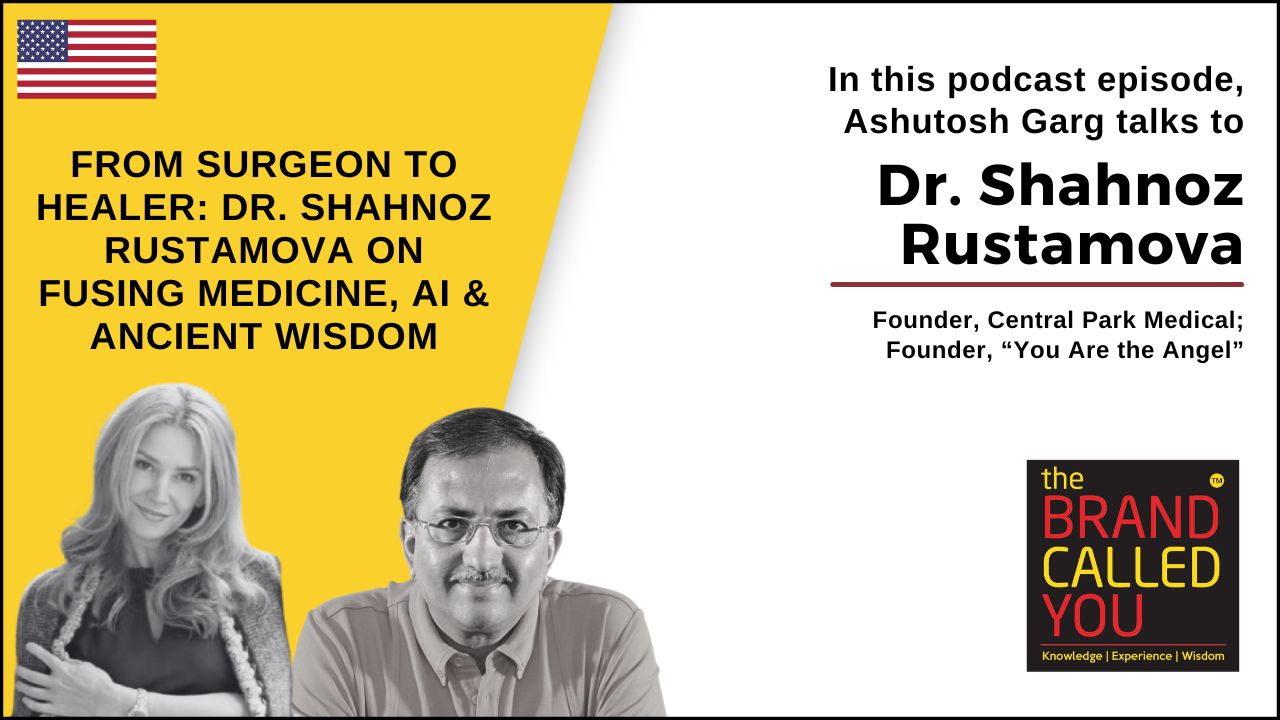
Dr. Shahnoz Rustamova, Founder, Central Park Medical & “You Are the Angel”
- Dual medical training and a traditional “stay in your lane” surgical mindset
- Personal health crisis in her 30s (idiopathic angioedema, wheelchair-bound, cardiac complications)
Podcast
Podcast: Play in new window | Download
Follow TBCY RSS
Overview
In this episode of TBCY, host Ashutosh Garg sits down with Dr. Shahnoz Rustamova, Founder of Central Park Medical and the nonprofit “You Are the Angel.” She shares her inspiring journey from a conventional surgeon to a pioneer in integrating modern medicine, holistic health, and advanced technologies like AI.
01:00 – What inspired her transition?
- Dual medical training and a traditional “stay in your lane” surgical mindset
- Personal health crisis in her 30s (idiopathic angioedema, wheelchair-bound, cardiac complications)
- Discovery of stem cell therapy as both patient and researcher
- Exploration of Tibetan, Ayurvedic, and Chinese medicine
- Realization that modern and ancient systems aim for the same outcomes, expressed differently
05:59 – What does integrative longevity medicine mean today?
- Combining physical, emotional, and spiritual health
- Western medicine focuses on the physical body; ancient systems address the entire ecosystem
- Integration of evidence-based science with time-tested wisdom for personalized care
07:43 – How is AI used in healthcare and education?
- AI reduces human error and fatigue
- Development of “Rustamova AI,” trained to reflect her expertise in 77 languages
- Assists residents in critical care, enhances patient education, and reduces physician burnout
- Provides clarity, reassurance, and support beyond clinical consultations
11:29 – Addressing AI risks
- Use of closed AI systems with low hallucination rates
- Strong emphasis on cybersecurity and validation of AI-generated outputs
12:53 – Role of DNA testing in personalized care
- Focus on three systems: physical, emotional/spiritual, and genetic/biological
- Example: tailoring cardiovascular treatment using genetic insights
- Eliminates one-size-fits-all approaches
18:15 – When should longevity planning begin?
- Healthspan optimization starts early—prevention is key
- Applicable across all life stages
19:45 – Bioidentical hormones
- Not first-line therapy but effective when personalized
- Must consider genetics and nutrient status
- Safer due to structural similarity to natural hormones
RESOURCES:
Learn more about Dr Shahnoz Rustamova: LinkedIn
Enjoyed this podcast?
She travelled the world, studied Tibetan, Ayurvedic, and Chinese medicine, and discovered they all echo the same principles—just from different angles. We’re speaking the same language, just in dialects!
Share your thoughts in the comments and help spread these insights within your network.
Would you love to give us 5 stars? ⭐⭐⭐⭐⭐ If yes, we’d greatly appreciate your review. Help us reach more people to keep them in the know as we talk to leaders, high achievers, and thought leaders from diverse backgrounds and nationalities. Excellence can come from anywhere. Stay in the know, and hear from emergent high achievers and experts.
Stay updated with what’s shaping the world today through the latest The Brand Called You Podcast episode. Follow us on iTunes, Spotify, and Anchor.fm.
You can find us at:
Website: www.tbcy.in
Instagram: http://bit.ly/3HO7N06
Facebook:http://bit.ly/3YzJOaD
Twitter: http://bit.ly/3wMBOXK
LinkedIn: https://www.linkedin.com/company/tbcy/
YouTube: http://bit.ly/3jmBqfq
Chingari: https://chingari.io/tbcypodcast
Josh: http://bit.ly/3WWP0nB
Thanks for listening!
Profile
- Dual medical training and a traditional “stay in your lane” surgical mindset
- Personal health crisis in her 30s (idiopathic angioedema, wheelchair-bound, cardiac complications)
- Discovery of stem cell therapy as both patient and researcher
- Exploration of Tibetan, Ayurvedic, and Chinese medicine
- Realization that modern and ancient systems aim for the same outcomes, expressed differently

