
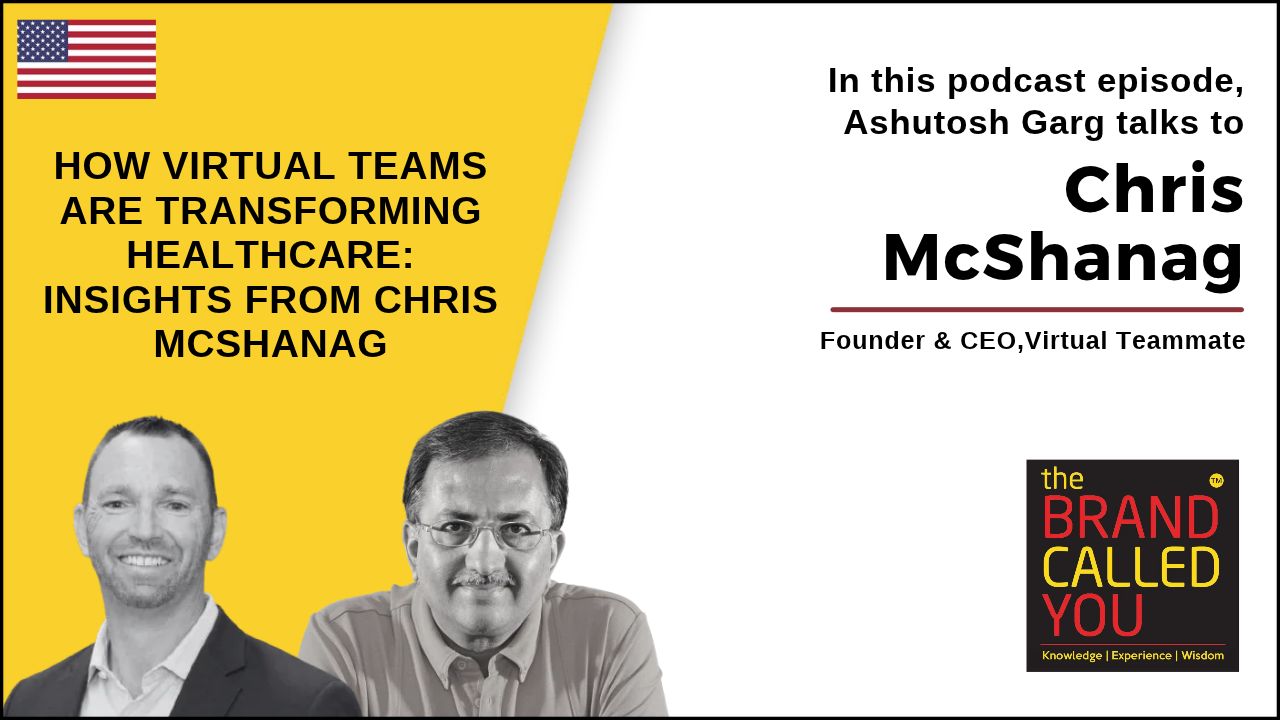
How Virtual Teams Are Transforming Healthcare: Insights from Chris McShanag
- Addressing staffing challenges in the U.S. healthcare sector
- Reducing administrative burdens on practitioners and clinics
Podcast
Podcast: Play in new window | Download
Follow TBCY RSS
Overview
In this insightful episode of The Brand Called You, Chris McShanag, Founder & CEO of Virtual Teammate, shares his journey and expertise in navigating the evolving world of virtual teams, AI integration, and operational challenges in healthcare. Explore how virtual models, effective delegation, and technology are reshaping the future of work and healthcare delivery.
00:41 – What problem was Virtual Teammate founded to solve?
- Addressing staffing challenges in the U.S. healthcare sector
- Reducing administrative burdens on practitioners and clinics
- Enabling healthcare professionals to focus more on patient care by offloading back-office tasks
01:17 – Why did Chris believe virtual teams were the future?
- Drawing on insights from his consulting background working with doctors and clinics
- Recognizing that technology was pulling practitioners away from patient interaction
- Identifying the need to automate and delegate administrative duties to improve healthcare outcomes
02:00 – Why does company growth often increase stress for owners?
- Failing to establish clear expectations and roles
- Highly skilled personnel handling low-value tasks, or “$100 resources doing $10 tasks”
- Patient dissatisfaction caused by administrative inefficiencies
- Physician burnout resulting from overwhelming paperwork outside clinic hours
03:02 – What are the most common operational bottlenecks in growing businesses?
- Challenges with insurance verification and billing in healthcare
- The critical importance of proper staffing and role allocation
- Healthcare’s unique model of often delivering services before payment is guaranteed
04:34 – How do leaders decide which tasks to delegate?
- Distinguishing between urgent and important tasks and urgent but less important activities
- Focusing personal efforts on high-value, revenue-generating work
- Delegating repetitive, process-driven activities such as social media and email management
- Aligning roles and expectations with measurable outcomes
06:49 – How do you build trust in fully remote teams?
- Using behavioural trait assessments, such as the Cultural Index, to improve team matching
- Fostering transparency and sharing productivity metrics
- Achieving productivity gains and significant staffing cost savings through virtual models
10:40 – How can virtual teammates become part of a company’s culture?
- Organizing monthly virtual team events and using gamification strategies
- Assigning client success managers to provide support and facilitate integration
- Offering benefits to gig workers to cultivate loyalty
- Emphasizing behavioural traits and maintaining high performance standards
10:50 – How will AI and human talent evolve together?
- Using AI as a productivity tool rather than a replacement, especially in healthcare
- Balancing AI-driven automation with essential human accountability
- Addressing the risks of overreliance on AI, including bias and a lack of nuance in unstructured data
- Recognizing AI-enabled employees as the new standard for productivity
12:48 – Can AI manage virtual teams better than humans?
- Using AI for productivity tracking and analytics
- Recognizing that human managers remain essential for nurturing talent, providing feedback, and mastering the art of management
- Balancing automation with human judgment to achieve effective team leadership
14:44 – Where is human judgment irreplaceable?
- Recognizing AI’s limitations in moral decision-making and value-based judgments
- Challenging automated outputs and ensuring ethical human oversight
15:16 – How can virtual teams ease pressure on healthcare systems?
- Helping small and independent clinics streamline their operations
- Providing efficient back-office support while reducing overhead costs
- Demonstrating impact through real-world examples, such as doubling a client’s claims-processing capacity
17:47 – Which administrative tasks are most time-consuming in healthcare?
- Insurance verification, billing, and claims management
- Patient scheduling and communication
- Access to global talent pools and its impact on traditional hiring models
18:09 – Which healthcare innovations are most exciting for the future?
- Advances in genetic and precision medicine for preventive healthcare
- AI’s potential to accelerate medical research and clinical trials
- Balancing technological advances with the essential human touch in patient care
RESOURCES
Learn more about Chris McShanag: LinkedIn
ENJOYED THIS PODCAST?
Back-office bottlenecks can be silent killers. Think insurance verification, billing, and simply hoping to get paid. Unlike many other sectors, healthcare providers often deliver services before receiving payment, with no guarantee of reimbursement.
Share your thoughts in the comments and help spread these insights throughout your network.
Would you love to give us 5 stars? ⭐⭐⭐⭐⭐ If yes, we’d greatly appreciate your review. Help us reach more people as we bring conversations with leaders, high achievers, and thought leaders from diverse backgrounds and nationalities. Excellence can come from anywhere. Stay informed and hear from emerging achievers and experts from around the world.
Stay updated with what’s shaping the world today through the latest The Brand Called You Podcast episode. Follow us on iTunes, Spotify, and Anchor.fm.
You can find us at:
Website: www.tbcy.in
Instagram: http://bit.ly/3HO7N06
Facebook:http://bit.ly/3YzJOaD
Twitter: http://bit.ly/3wMBOXK
LinkedIn: https://www.linkedin.com/company/tbcy/
YouTube: http://bit.ly/3jmBqfq
Chingari: https://chingari.io/tbcypodcast
Josh: http://bit.ly/3WWP0nB
Thanks for listening!
Profile
- Chris McShanag is the Founder and CEO of Virtual Teammate, helping organizations build and manage effective remote teams.
- He specializes in virtual workforce models, operational efficiency, delegation, and the integration of technology to improve business performance.
- Chris brings particular insight into healthcare operations, exploring how virtual teams and AI can address workforce challenges and improve service delivery.

