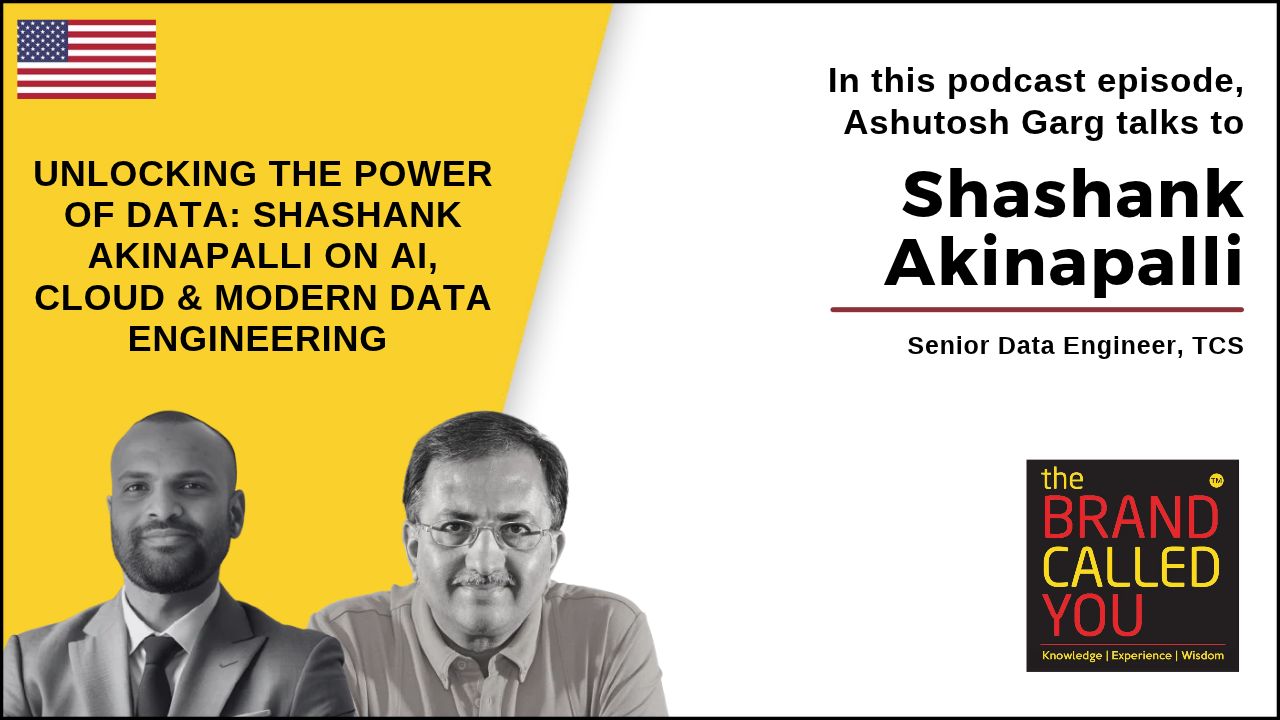
Insights from Shashank Akinapalli, Senior Data Engineer at TCS
- Growing up in South India with a strong interest in mathematics.
- Studying at GITAM University, Visakhapatnam, where he gained exposure to advanced technologies and had access to a 24/7 computer lab.
Podcast
Podcast: Play in new window | Download
Follow TBCY RSS
Overview
Shashank discusses adapting to new cultures and technological changes, the challenges of migrating legacy systems, the growing strategic importance of data, and what the future holds for data professionals. Below are the key moments and learnings from the conversation.
00:50-What sparked Shashank’s passion for technology, and how did his early years shape his career?
- Growing up in South India with a strong interest in mathematics.
- Studying at GITAM University, Visakhapatnam, where he gained exposure to advanced technologies and had access to a 24/7 computer lab.
- Exploring database management, Unified Modeling Language (UML), and basic artificial intelligence as early as 2012.
02:05-What were the biggest challenges Shashank faced when moving to the United States?
- Adapting to American English and different communication styles.
- Understanding new cultural nuances.
- Connecting with international students during his master’s program to better adapt to the U.S. education and work culture.
02:56-How does Shashank differentiate between data engineering, data analytics, and data science?
- Data Engineering: Builds the infrastructure and pipelines that make data accessible.
- Data Analytics: Turns data into reports and insights to support decision-making.
- Data Science: Uses data, AI, and machine learning to build predictive models and uncover deeper insights.
04:15-Why has data become a strategic asset for organizations?
- The rapid growth of diverse data types, including structured and unstructured data, voice, and text.
- Real-time decision-making has become essential for business growth and fraud prevention.
- Data plays a critical role in sectors such as healthcare, supporting data protection and organizational resilience.
05:34-What mistakes do enterprises make when building modern data platforms?
- Replicating legacy architectures without redesigning them for modern cloud environments.
- Overlooking undocumented transformation logic and regulatory compliance requirements.
- Adoption varies across industries, with banking and healthcare moving more cautiously than supply chain and retail.
06:59-What are the challenges of migrating legacy systems to the cloud?
- Migration is not simply about transferring data; organizations must also leverage cloud-native capabilities.
- Building efficient, AI-enabled data architectures while maintaining strong compliance frameworks.
- Reducing manual interventions and moving toward real-time, automated, and self-healing systems.
08:14-How can organizations balance innovation and governance during digital transformation?
- Innovation and governance must work together to enable safe and sustainable growth.
- Modern governance includes self-monitoring, metadata management, and role-based security.
- Excessive regulation can stifle innovation, while weak governance can introduce significant risks.
09:35-How does data drive better outcomes in healthcare?
- Healthcare depends on highly accurate data to improve quality, claims management, and real-time decision-making.
- Poor data quality can negatively affect patient experiences and regulatory compliance.
10:18-Which industries are undergoing the fastest data transformation?
- Retail and supply chain are leading the adoption of modern data practices.
- Banking and healthcare are progressing more cautiously because of regulatory requirements and data sensitivity.
- Industry-specific needs and compliance requirements influence the pace of digital transformation.
10:51-Why is data governance crucial in today’s AI-driven world?
- Data governance is foundational to building reliable and responsible AI systems.
- It involves data cleansing, quality control, security, and access management.
- Strong governance helps organizations ensure that AI systems are built on trusted, accurate, and secure data.
11:38-How will AI change the role of data engineers over the next five years?
- Data engineers will move beyond traditional coding toward managing AI-enabled and predictive data pipelines.
- Professionals will need stronger knowledge of AI, data governance, and industry-specific compliance.
- Technical skills alone will no longer be enough; business understanding and adaptability will become increasingly important.
12:55-What infrastructure is needed before organizations can effectively leverage generative AI?
- A robust, cloud-based data architecture.
- High-quality metadata and well-structured data systems.
- Strong data governance and role-based access controls.
- Trusted and reliable enterprise systems to support AI applications.
13:58-What skills and mindset should young data professionals develop?
- Look beyond programming and develop the ability to adapt to rapidly changing technologies.
- Gain practical experience through real-world business cases and emerging technologies such as distributed systems and AI.
- Develop business and strategic thinking alongside technical expertise.
- Embrace continuous learning to build a sustainable and future-ready career.
RESOURCES
Learn more about Shashank Akinapalli: LinkedIn
ENJOYED THIS PODCAST?
Why Is Data the New Oil?
Data is everywhere today—not just in numbers, but also in text, audio, images, and other forms. Businesses increasingly rely on this vast and diverse data to make real-time decisions, improve operations, and prevent fraud.
What are your thoughts? Share your perspective in the comments and help spread these insights across your network.
Would you love to give us 5 stars? ⭐⭐⭐⭐⭐ If yes, we’d greatly appreciate your review. Help us reach more people as we bring conversations with leaders, high achievers, and thought leaders from diverse backgrounds and nationalities. Excellence can come from anywhere. Stay informed and hear from emerging achievers and experts from around the world.
Stay updated with what’s shaping the world today through the latest The Brand Called You Podcast episode. Follow us on iTunes, Spotify, and Anchor.fm.
You can find us at:
Website: www.tbcy.in
Instagram: http://bit.ly/3HO7N06
Facebook:http://bit.ly/3YzJOaD
Twitter: http://bit.ly/3wMBOXK
LinkedIn: https://www.linkedin.com/company/tbcy/
YouTube: http://bit.ly/3jmBqfq
Chingari: https://chingari.io/tbcypodcast
Josh: http://bit.ly/3WWP0nB
Thanks for listening!
Profile
- Shashank is an experienced technology leader with expertise in data, digital transformation, and modernizing legacy systems.
- He brings a strong perspective on adapting to new cultures, technologies, and evolving professional environments.
- Shashank focuses on the strategic importance of data and the challenges organizations face when migrating complex legacy systems.

