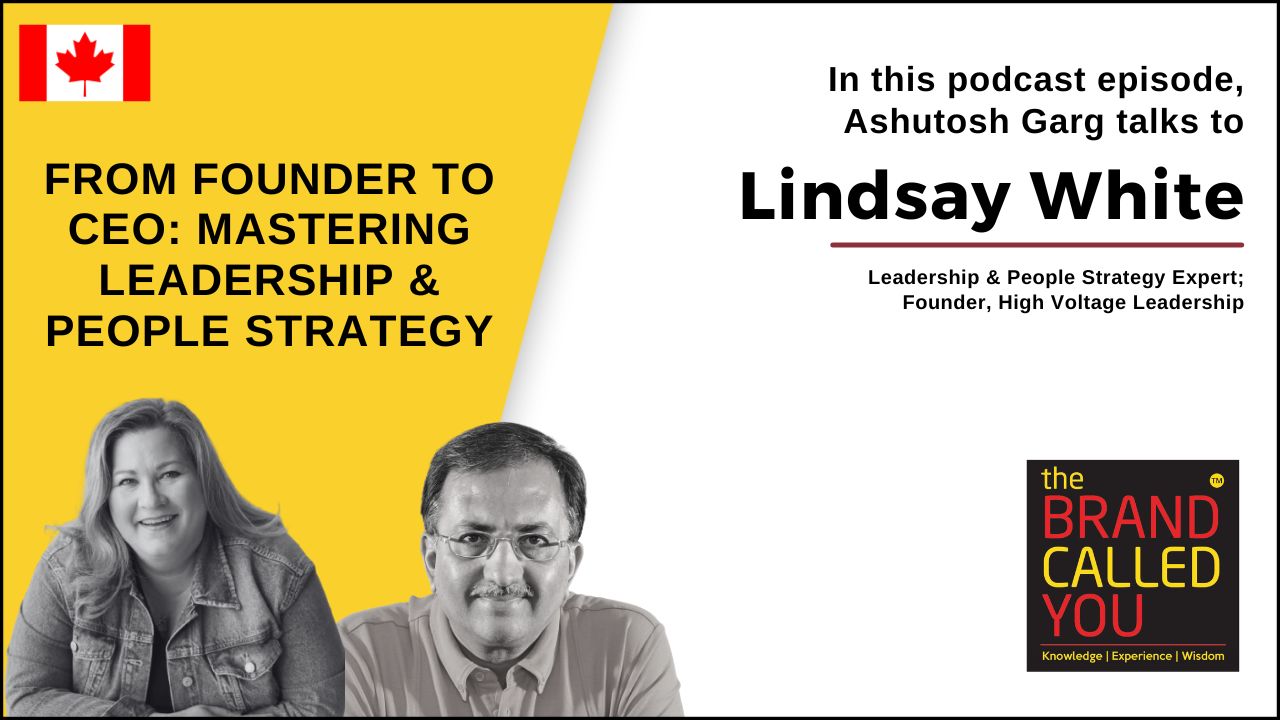
Lindsay White, Leadership & People Strategy Expert, Founder of High Voltage Leadership
- Founders often possess deep expertise but struggle with growth when required to transition beyond their zone of technical comfort.
- The challenge of moving from being the “smartest person in the room” to leading effectively as a CEO.
Podcast
Podcast: Play in new window | Download
Follow TBCY RSS
Overview
In this episode of TBCY, Ashutosh Garg sits down with Lindsay White, a renowned leadership and people strategy expert from Calgary and Founder of High Voltage Leadership. The conversation is packed with actionable insights for founders, CEOs, and anyone passionate about building sustainable, high-performing teams. Below is a recap of the core topics covered, organized by the key questions asked and their timestamps.
00:49 – What makes scaling a business fundamentally a leadership challenge?
- Founders often possess deep expertise but struggle with growth when required to transition beyond their zone of technical comfort.
- The challenge of moving from being the “smartest person in the room” to leading effectively as a CEO.
02:13 – Why do founders struggle to shift from entrepreneur to CEO?
- The required mindset, skill set, and day-to-day behaviors are very different.
- Entrepreneurs thrive on risk and innovation, while CEOs focus on risk management, vision, and culture.
- The transition is often complex and messy.
03:22 – What are the warning signs that a founder has outgrown their leadership style?
- Micromanagement and an inability to delegate.
- Creating chaos through over-involvement, even after hiring capable team members.
04:37 – What stalls growth more: weak strategy or weak people leadership?
- Most often, it is a combination of both.
- A business strategy without a cohesive people strategy creates organizational disconnects.
- Integrating talent, performance management, and compensation with business goals is essential.
07:11 – How can founders build a resilient culture that grows with the company?
- Culture should be intentional and rooted in the founder’s personal values.
- Leaders must define and articulate behaviors that reflect those values.
- Clarity and alignment are critical for scaling culture successfully.
09:04 – What are common hiring mistakes during rapid growth?
- Hiring solely to fill immediate gaps instead of considering values and long-term fit.
- Failing to define clear roles and responsibilities.
- Not providing employees with the tools and clarity they need to succeed.
10:44 – How should leaders handle loyal early employees who can no longer grow with the business?
- Approach transitions with dignity, kindness, and honesty.
- Recognize and honor their contributions.
- Provide adequate time and support during the transition.
12:36 – What separates healthy high-performance cultures from toxic hustle cultures?
- Hustle culture prioritizes achievement at the expense of well-being.
- Healthy high-performance cultures value fulfillment, impact, and rest alongside results.
- Joy, meaningful work, and recovery are essential components of sustained success.
14:17 – What role does emotional intelligence play in modern leadership?
- Leaders must be aware of team dynamics and underlying issues.
- The ability to listen, observe, and address unspoken concerns is critical.
- High-performing teams are built on trust and emotional awareness.
15:48 – How can female founders navigate leadership expectations that differ from those placed on men?
- Female founders often balance business leadership with family and caregiving responsibilities.
- The goal should not be perfect work-life balance but a values-driven work-life blend.
- Self-compassion and authenticity are essential.
17:59 – What systems prevent a business from becoming dependent on its founder?
- Clear operational and people systems.
- Defined roles, accountability structures, and feedback mechanisms.
- Organizational clarity that allows the founder to step back without disrupting success.
19:34 – How can founders avoid burnout while driving ambitious growth?
- Passion often leads founders to overextend themselves.
- External support, such as coaches and mentors, can help identify burnout risks early.
- Priorities should be aligned with personal values, not just business demands.
RESOURCES:
Learn more about Lindsay White: LinkedIn
Enjoyed this podcast?
Growth often stalls not because of weak business strategy, but because of weak people strategy. Are you connecting human talent to outcomes, or simply filling gaps?
Share your thoughts in the comments and help spread these insights throughout your network.
Would you love to give us 5 stars? ⭐⭐⭐⭐⭐ If yes, we’d greatly appreciate your review. Help us reach more people to keep them in the know as we talk to leaders, high achievers, and thought leaders from diverse backgrounds and nationalities. Excellence can come from anywhere. Stay in the know, and hear from emergent high achievers and experts.
Stay updated with what’s shaping the world today through the latest The Brand Called You Podcast episode. Follow us on iTunes, Spotify, and Anchor.fm.
You can find us at:
Website: www.tbcy.in
Instagram: http://bit.ly/3HO7N06
Facebook:http://bit.ly/3YzJOaD
Twitter: http://bit.ly/3wMBOXK
LinkedIn: https://www.linkedin.com/company/tbcy/
YouTube: http://bit.ly/3jmBqfq
Chingari: https://chingari.io/tbcypodcast
Josh: http://bit.ly/3WWP0nB
Thanks for listening!
Profile
- Lindsay White is the Founder of High Voltage Leadership and a recognized expert in leadership, culture, and people strategy.
- Based in Calgary, she works with founders, CEOs, and executive teams to build sustainable, high-performing organizations.
- Her expertise focuses on leadership development, employee engagement, talent management, and creating healthy workplace cultures.

